The Future is Female: Sri Lanka Cannot Afford to Leave Half Its Talent Behind
- Editor
- June 22, 2026
- English Header, Opinions
- opinion
- 0 Comments
Author: Saroj Pathirana
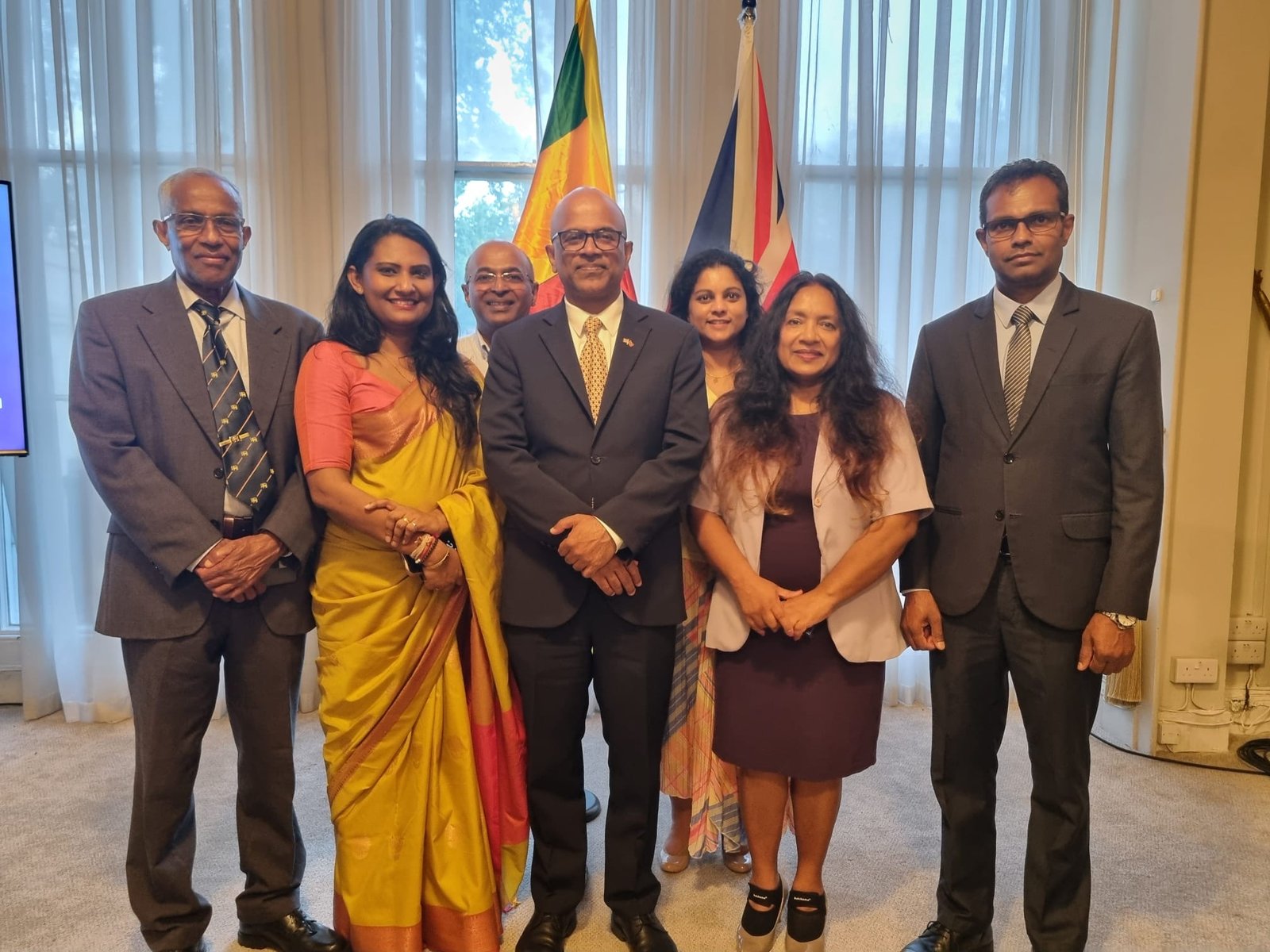
On Wednesday, 17 June 2026, at the Sri Lanka High Commission in London, an uncomfortable truth hung in the air. Addressing an audience gathered to discuss sustainability, clean energy and inclusive development, lawyer, mother and CEO of Solar Village SDG cic, Nilmini Roelens, laid out a paradox that should concern every policymaker, investor and business leader in Sri Lanka.
Sri Lanka educates its girls. It delivers impressive health outcomes for women. Yet it systematically fails to harness their economic potential.
Women constitute 51.6 percent of Sri Lanka’s population, but female labour force participation remains a startlingly low 31.3 percent. According to IMF data cited during the presentation, Sri Lanka has the 14th-largest gender gap in labour force participation globally. Closing that gap could increase national GDP by between 20 and 30 percent.
These are not marginal gains. They are transformative.
Sri Lanka faces an ageing population and a shrinking workforce from 2026 onwards. Unlocking female economic participation is no longer a social aspiration; it is an economic necessity.
As Roelens argued, Sustainable Development Goal 5: Gender Equality, is the most cross-cutting of all the UN Sustainable Development Goals. Progress here creates multiplier effects across every other priority: poverty reduction, education, health, clean energy, climate resilience and sustainable communities.
Sri Lankan mothers are already the backbone of families, communities and the informal economy. The question is why so many talented women are forced to choose between caregiving and career progression when modern economies should enable both.
No nation can prosper by under-utilising half of its human capital. The barriers facing Sri Lankan women are structural.
Unpaid care responsibilities, outdated social norms, inadequate childcare provision, workplace discrimination and unsafe public transport continue to restrict women’s economic participation.
One observation from the discussion resonated deeply: many women simply do not feel safe travelling to work on public transport.
Safe, reliable and affordable public transport is often absent from conversations about gender equality, yet it is fundamental to economic inclusion. A woman who cannot commute safely cannot access opportunity. Investing in safer buses, better lighting, secure rail networks and stronger protections against harassment is not merely transport policy; it is economic policy.
The opportunity extends beyond traditional sectors.
As Sri Lanka pursues its climate commitments, renewable energy targets and green growth agenda, women must be central to the transition. From clean energy entrepreneurship to sustainable agriculture, circular economy initiatives and community-led climate adaptation, the future industries of Sri Lanka cannot be built without female leadership.
The Sustainable Development Goals are interconnected. Gender equality drives decent work and economic growth (SDG 8), sustainable cities and communities (SDG 11), climate action (SDG 13) and affordable and clean energy (SDG 7).
As Roelens reminded the audience, sustainability rests on three pillars: people, planet and profit. Excluding women weakens all three.
Three priorities emerged clearly from the discussion, as investments with measurable economic returns:
1. Invest in affordable, accessible childcare so women are not penalised for motherhood.
2. Create genuinely equitable workplaces through transparent pay, flexible working arrangements, stronger maternity protections and clear pathways to leadership.
3. Transform infrastructure and skills development by making public transport safer and expanding vocational training and tertiary education opportunities, particularly in rural communities and emerging green industries.
Sri Lanka could continue to tolerate the inefficiencies of inequality, or it can unleash one of the largest untapped growth opportunities in the country’s history. The future of Sri Lanka’s economy will not be determined solely by fiscal reforms, debt restructuring or foreign investment. It will be determined by whether the nation finally decides that women’s contribution is not optional, supplementary or secondary.
The future is female; not because women should replace men, but because Sri Lanka cannot prosper while half its talent remains on the sidelines.
The case for true gender equality is economic, but it is also profoundly human. A society that values dignity recognises that every woman – whether she chooses to be a fulltime mother, an entrepreneur, a teacher, an engineer, Prime Minister or all of these at different stages of her life – deserves the freedom and support to make that choice without structural disadvantage.
The future is Green…
Demonstrating the synergies between the various SDGs, Roelens explained their interconnectedness. She highlighted that SDG7 Affordable Clean Energy for All was a fundamental and hinge goal. Clean renewable energy is an easy win for Sri Lanka that could also significantly transform the island’s economy.
In addition to the revolutionary outcomes from female labour force participation, with twin pronged green energy pursuits of the 2030 Agenda and 2050 Carbon Net Zero, Sri Lanka could significantly enhance her economic growth and generate thousands of new jobs. Globally, output would increase as much as USD 43 Trillion by 2070 with an additional 24 million jobs by 2030.
Shifting from harmful, stiflingly expensive fossil fuel imports (coal, oil and gas) and enabling the adoption of EVs, would catalyse the move towards renewables. Sri Lanka can swiftly ensure sustainable economic growth. Fossil fuels are rapidly depleting, globally; and experience has shown us: scarcity drives price.
If Pakistan can transition rapidly to renewable energy and transform her economy, surely Sri Lanka can do it too, and do it better? A solar boom supported by battery storage could also save Sri Lanka USD billions in fossil fuel imports.
Sri Lanka’s people cannot continue to pay the compounding price of a compromised and outdated grid and the harm from fossil fuels.
A recording of the talk which was organised by the Friends of Sri Lanka Association is available at the following link: https://www.youtube.com/watch?v=FuBzC1RxnwE