Tax Giveaways, Struggling Schools
- Editor
- October 21, 2025
- English Header, Opinions
- opinion
- 0 Comments
How Low Taxes Drove Sri Lanka’s Economic Crisis and Squandered its Education Lead
Summary
Susikala was working as a daily wage earner at a flower garden in Hatton, a hilly area in central Sri Lanka, when in April 2022 the government defaulted on its debt. The default sent the economy into a tailspin, and like millions of Sri Lankans, Susikala lost precious wages as her employer struggled to pay her. The family had to rely on her husband’s LKR 1,500 (US$5) daily wage at a tea plantation.
Food prices doubled by September. After the government began reducing energy subsidies in October 2023 as part of an effort to reduce spending under an International Monetary Fund program, the cost of electricity and transportation soared. Her 5-year-old son missed school for three months and her older daughter, who was 11, walked the two kilometers to school to save the bus fare. Susikala has only a few electrical devices—a rice cooker, phone, and light—but their power supply was cut as unpaid bills accumulated, forcing her to pawn jewelry to get reconnected.
Susikala’s experience was similar to that of countless other Sri Lankans during the acute phase of the economic crisis, the worst since the country’s independence in 1948, and the hardship continues to the present. More than a million Sri Lankans lost their jobs during the crisis and a million households lost power following electricity price increases. More than four million people were pushed below the national poverty line. The least well-off bore the brunt, as those who are poorer reduced their consumption by more than those who are wealthier.
Practically speaking, an economic crisis’s impact on people is almost invariably a crisis for human rights. In Sri Lanka, among the root causes of the crisis were government policy choices that led to extremely low tax revenues. Disastrous tax policy choices just prior to the crisis compounded bad policy choices that had unfolded over decades: chronically inadequate tax revenues have long stunted the growth of government spending on rights-essential services such as health, education, and social security.
This report examines how Sri Lanka’s tax policies have impacted human rights by starving the treasury of revenue for essential social spending, with particular focus on impacts that affect children’s right to education. It is based on a comprehensive analysis of secondary data; a review of literature including a large body of economic research; and interviews with 70 people including those impacted by the economic situation and a wide spectrum of Sri Lankan economic experts.
It finds that a combination of the widespread use of corporate tax incentives, low taxation of personal income and wealth, and key gaps in tax enforcement have contributed to a tax system that undermines human rights in two significant ways. First, these policy failures have contributed to and exacerbated an economic crisis with disastrous impacts on the human rights of the population. Second, over the course of several decades they have generated inadequate revenues to drive the progressive realization of economic, social and cultural rights. The report focuses in particular on describing how Sri Lanka has failed to make progress in realizing the right to education that is commensurate with its resources. In addition, the regressivity of Sri Lanka’s tax system further risks undermining rights, since it is highly reliant on “indirect” taxes, that is, taxes on goods and services such as value-added taxes that tend to claim a higher share of one’s income the poorer one is, since everyone pays the same rate regardless of income.
A decline in Sri Lanka’s tax-to-gross domestic product (GDP) ratio that began in the late 1970s has contributed to a steady decline in education spending relative to GDP. Particularly after steep tax cuts in 2019, this ratio has fallen to among the lowest in the world. This report documents how this inadequate funding has undermined children’s right to education, including by forcing schools to rely on fees from parents for materials as basic as exam paper.
The central role that tax policy has played in Sri Lanka’s economic crisis and its human rights fallout highlights the urgent need to reform both domestic and international tax systems to ensure they align with human rights imperatives. All governments that are parties to the International Covenant on Economic, Social and Cultural Rights (ICESCR), including Sri Lanka, are obligated to enact policies that ensure the progressive realization of economic, social and cultural rights. This includes tax policies that help generate the “maximum available resources” governments are obliged to mobilize towards meeting that obligation. This report describes how its own failures notwithstanding, the Sri Lankan government is constrained by an international tax system that impairs its ability to raise revenues from wealthy individuals and multinational companies.
Sri Lankans elected a new government led by President Anura Kumara Dissanayake in September 2024, rejecting established political parties they considered responsible for the economic crisis. Dissanayake and his supporters played a prominent role in the protests after the 2022 economic crisis. To uphold the economic and social rights of Sri Lankans, including to education, the government should institute tax reforms to increase revenues through progressive measures and curtail regressive taxes, including by increasing tax revenues from personal income and wealth. It should also end corporate tax incentives that are not tied to a specific and compelling policy rationale and subject to public cost-benefit analysis.
Tax Policy Through a Human Rights Lens
International human rights law obligates governments to take steps, to the maximum of their available resources, to progressively realize the full enjoyment of economic, social and cultural rights. These include the rights to health, education, social security, and an adequate standard of living. This obligation necessarily implicates states’ fiscal practices, including tax policy. International law also requires states to act not only domestically but also through international assistance and cooperation.
In an April 2025 statement, the United Nations Committee on Economic, Social and Cultural Rights (CESCR), a UN human rights body charged with interpreting the ICESCR, offered guidance on how states should align tax policies with human rights obligations. The CESCR maintained that tax systems should be adequate, progressive, and non-discriminatory, and effective at preventing illicit financial flows and tax abuse. Policymaking should be inclusive, transparent, participatory, and evidence based.
Moreover, governments’ obligation to act through international assistance and cooperation should also inform their approach to tax policy. States, particularly those with the most power in international rulemaking, should support the development of equitable global tax rules that enable all governments to raise adequate revenues from tax for the fulfillment of rights. In the same vein, governments should work to ensure that the extraterritorial impacts of their tax policies do not undermine other governments’ ability to raise sufficient tax revenues to realize rights.
Sri Lanka’s 2022 Default on Debt and the IMF Deal
By the time the government defaulted on its debt in April 2022, foreign reserves had dropped to $1.9 billion, amounting to about one month of imports. Debt-to-GDP had hit 114 percent, far above recommended levels for a lower-middle-income country. A year later, the International Monetary Fund (IMF) and the Sri Lankan government agreed on a $3 billion bailout that set a target of reducing debt to 95 percent of GDP by 2032. Several economists criticized this as giving creditors too good a deal and leaving Sri Lanka with interest payments that would continue to consume an enormous share of its revenues. Indeed, in 2024, interest payments amounted to 57 percent of Sri Lanka’s total revenue. Although debt is beyond the scope of this report, this staggering figure reflects the far-reaching impact debt service payments can have on government budgets and on the availability of funds for social spending that improves wellbeing and advances rights.
In August 2025, the UN High Commissioner for Human Rights released a report on Sri Lanka noting that the “the severe impacts of the economic crisis and debt burden on the public … underscore the need for Sri Lanka’s external creditors to provide the Government with the fiscal space needed to realise economic, social and cultural rights and to ensure austerity measures do not undermine Sri Lanka’s ability to fulfil its human rights obligations.” As Ahilan Kadirgamar, a political economist at Jaffna University, noted, “[t]axes alone won’t get us out of this crisis.”
At the same time, taxes were a major factor in driving Sri Lanka into crisis. In March 2022, Sri Lanka’s tax-to-GDP ratio was 7.4 percent of GDP, among the lowest in the world. Experts – and ultimately Sri Lanka’s Supreme Court – blamed this for playing a decisive role in the government’s inability to meet its debt obligations. Around 90 percent of Sri Lanka’s revenues come from taxes. There is no international tax benchmark for revenues, but research by World Bank economists has identified 15 percent as a “tipping point” for countries “to generate sufficient domestic resources that can be invested in health, education, and infrastructure.” However, this is a low threshold from a human rights perspective, as prevailing international benchmarks call for governments to spend 5 percent of GDP on health and around 4 to 6 percent on education alone.
A key requirement of the IMF program put into effect following Sri Lanka’s default on its debt was for the government to achieve a minimum tax-to-GDP ratio of 15 percent. While the program included some important measures to address gaps in corporate taxes and those of high earners, it made tax revenues even more highly reliant on value-added taxes, which, when broad-based, are regressive.
Between 2021 and 2024, the government increased VAT from 8 to 20 percent and removed exemptions on products like food staples and school stationery, exacerbating the impact of cost increases on struggling families in the midst of soaring inflation. It also removed subsidies on electricity and fuel without adequate compensatory measures to help people cope with increased costs.
Government Tax Policy: Current Challenges have been Decades in the Making
One of the key factors that catastrophically pushed down Sri Lanka’s tax-to-GDP ratio were 2019 tax cuts implemented by then President Gotabaya Rajapaksa, who argued that they would spur economic growth. Once the crisis hit, a group of organizations including the Sri Lanka chapter of Transparency International sued dozens of senior officials responsible for the country’s economy around the time of the crisis, including officials at the Ministry of Finance and the Central Bank, blaming the 2019 tax cuts in particular for precipitating the crisis. In November 2024, the Supreme Court issued a ruling in favor of the petitioners, calling the 2019 tax cuts an “imprudent decision” that “brought about a domino effect” that led to the crisis. The International Monetary Fund made a similar assessment when it approved a bailout in March 2023, estimating revenue losses from the 2019 tax cuts “exceeding 2 percent of GDP,” which “further exacerbated vulnerabilities.”
In truth, the sharp downward slope of Sri Lanka’s tax-to-GDP ratio has been decades in the making, and can be traced back to an economic shift that began in November 1977 when Sri Lanka began liberalizing its economy. These reforms were effective in achieving sustained growth. However, since companies and individuals benefiting from this growth were not effectively taxed, tax as a share of GDP consistently declined over time. Prior to the shift, revenue-to-GDP ranged from 20 to 25 percent; around 90 percent of revenues were comprised of taxes, although tax-to-GDP was not reliably tracked as an independent metric at that time. By 1980, when tax-to-GDP data is available, it declined to 15 percent and hovered at around 11 percent in the decade before the 2019 tax cuts, dropping to 7.4 percent in 2022.

Beginning in 1983, Sri Lanka experienced a civil war that would last 26 years, with tens of thousands of people killed, widespread destruction, and whole communities displaced, especially in the north and east. Despite the enormous humanitarian toll of the war, it appears to have had remarkably little impact on the overall trajectory of Sri Lanka’s tax revenues, or the overall downward trajectory of tax revenues and social spending relative to GDP. The economy continued to grow at an average annual rate of 5 percent during the war years, but government tax revenues and social spending declined as a percentage of GDP before, during, and after the war. Tax revenues and education spending as a share of GDP started decreasing in 1977, decreased further during the 1983-2009 war, and, rather than improving after the end of the conflict, declined still further after 2009. The 2019 cuts should thus be understood as the final blow following decades of flawed tax policy that left the government with inadequate revenues.
Tax Revenues are Inadequate to Meet Rights Obligations and are Regressive
From a human rights perspective, two important components of taxes are their adequacy (they should raise enough revenues for the country to do its best at delivering on rights) and progressivity (taxes as a share of income and/or wealth should generally be higher the wealthier a person is). In Sri Lanka, government policies have left tax revenues inadequate by every rights-informed benchmark. The inadequacy reflects three main longstanding gaps in Sri Lanka’s tax policies: the unreasonably widespread use of corporate tax incentives, low taxation of personal income and wealth, and tax abuse enabled by lack of administrative capacity and corruption. These gaps contribute to making Sri Lanka unable to meet its human rights obligations and they make the system regressive.
Corporate tax incentives have long been central to Sri Lanka’s strategy for attracting and spurring investment. The Board of Investments (BOI), a body of five commissioners appointed by the president first established with more limited scope in 1978, is empowered to grant tax incentives with little oversight or procedural guardrails. It can grant tax exemptions to individual companies or projects under the Strategic Development Projects (SDP) Act with no requirement to publish the terms. In 2021, the government established Port City, a zone within Colombo where companies benefit from tax incentives so far-reaching that even employees are exempt from income taxes. Despite a government commitment under the IMF program not to grant new tax incentives, between January and September 2024 the previous government approved exemptions for 24 new companies in Port City, and the current government plans to approve four more pending requests, according to an IMF staff report published in June 2025.
The historical cost of these incentives is difficult to assess because of lack of transparency, but IMF staff reports dating at least as far back as the 1990s have established the lost revenue to be as much as 2 percent of GDP. In March 2024 the government published a detailed accounting of the value of all tax exemptions for FY2022, a requirement under the IMF program, which revealed a total cost of LKR 978 billion (US$2.7 billion). That figure is equivalent to 56 percent of the total tax revenue collected that year and nearly three times the education budget.
Many governments seek to attract investment by offering tax incentives, including full or partial exemptions from corporate income tax, value added taxes, customs taxes, and other taxes, including even the personal income tax of employees. A substantial body of economic research has long questioned the effectiveness of such incentives, given their impact on public revenues and evidence that non-tax factors such as political stability, rule of law, and market opportunities are stronger determinants of where companies choose to locate.
From a human rights perspective, the lost revenue can undermine governments’ ability to meet their human rights obligations, and risks increasing the tax share borne by people with lower incomes. Moreover, when a government offers corporate tax incentives, it creates pressure on other governments to do the same, fueling tax competition that erodes public revenues in all countries trapped in this spiral. Reflecting this concern, in 2017, the CESCR in its General Comment 24 stated that “[l]owering the rates of corporate tax solely with a view to attracting investors encourages a race to the bottom” and is “inconsistent with the duties of the States parties to the Covenant.”
This illustrates the urgent need for improved international cooperation, including for example through a global minimum corporate tax, to prevent harmful tax competition. Negotiations are ongoing for a first-ever UN treaty on international tax cooperation, a historic opportunity for establishing robust rules to prevent a race to the bottom.
Lost revenues from corporate tax exemptions are compounded by extremely low revenues from taxes on personal income and assets. Here, too, the government’s ability to raise revenues is to some degree constrained by an international system that enables people to avoid such taxes, surfacing the need for stronger international tax cooperation. Nonetheless, there are steps governments can take to increase taxation on personal income and wealth. In 2022, Sri Lanka had only 204,467 personal tax filers in a country of 22 million people.
Under the IMF program, the government reintroduced a system requiring employers to withhold income taxes to increase compliance (a system that had been abolished alongside the 2019 cuts); decreased the minimum income tax threshold from LKR 250,000 ($825) to 150,000 ($500) monthly (which still only captures a small percent of highest earners); and doubled the maximum marginal rate from 18 to 36 percent. The government also committed to introduce a tax akin to a property tax, although that effort is complicated by a constitutional provision that gives provincial councils the power to collect property taxes. According to the Tax Justice Network, a non-governmental organization that advocates for progressive tax reforms, if Sri Lanka imposed a wealth tax on the wealthiest 0.5 percent at a progressive rate of between 1.7 and 3.5 percent—a rate based on Spain’s “solidarity charge,” enacted in 2002—it would generate $450 million annually, which amounts to nearly half Sri Lanka’s total education budget in 2022.
Faltering revenues from corporate and personal taxes—called “direct” taxes—has made Sri Lanka unusually dependent on indirect taxes, such as VAT. Direct taxes accounted for 33 percent of tax revenues in 1977, but averaged just 19 percent between 1980 and 2018. That share rose to 30 percent prior to the crisis, but budget documents indicate that fiscal reforms are projected to bring it down to around one-quarter of total tax revenues. These reforms also increased the share of revenues from VAT. Whereas VAT made up around 25 percent of revenues between 2010 and 2023, according to budget documents, it is estimated to rise to more than one-third for 2024 through 2027. A 2024 World Bank review of Sri Lanka’s fiscal reforms described its reforms of VAT as “particularly regressive,” noting it contributed to a poverty increase of 3.9 percentage points.
Compounding all of this, a lack of administrative capacity and corruption in revenue agencies further depletes tax revenues. An IMF review of governance in the country found, for example: “There is virtually no culture of integrity observed [in revenue agencies], with corruption allegedly found at every level – including top management.”
As with corporate tax incentives, a strong UN tax treaty could support these efforts by enabling governments to identify assets and prevent illicit financial flows. It could also address another major source of revenue loss that is beyond the scope of this report: profit shifting and offshore tax abuse by multinational companies, which costs Sri Lanka, conservatively, an estimated $413 million annually, according to the Tax Justice Network.
Inadequate and Regressive Taxes Impede the Realization of Rights: Education as Case Study
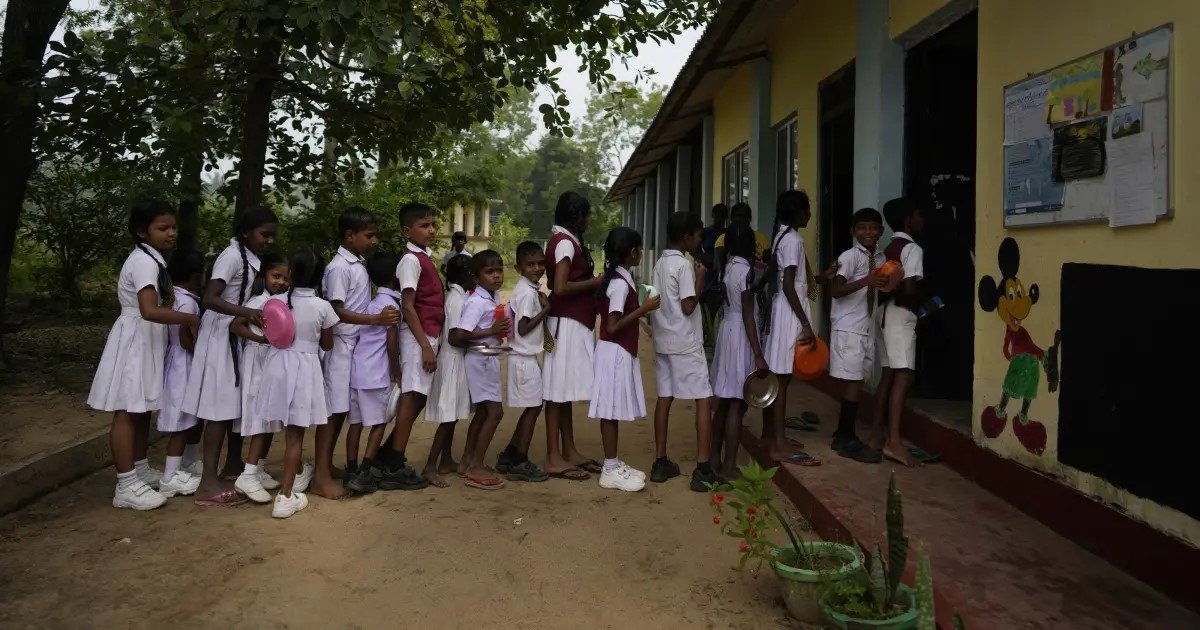
Sri Lankan law provides for free primary and secondary education. However, Human Rights Watch found that inadequate tax revenues have contributed to chronic underfunding of Sri Lanka’s education system, which undermines children’s right to education. While ostensibly free, public schools in Sri Lanka often charge families “development” fees, exam fees, and even assessments for water and electricity. Principals and education officials told Human Rights Watch that schools had no choice but to charge these fees because the money they receive from the government is not enough to cover basic things like cleaning and supplies. When parents do not pay, schools are forced to go without these resources, while schools with wealthier families have access to more resources, creating significant disparities between schools based on parents’ income.
Geethma, a teacher at a (government) boys’ primary school in Colombo, described how her school has smart boards and labs for biology, chemistry, and physics. “The government isn’t providing this,” she clarifies, it’s paid for by alumni donations and fees. A second teacher, Kushmi told us: “[public education] is free in name only.”
Susikala, the woman whose experience during the economic crisis opens this report, told us things have improved since the worst days of the crisis—she has found a new job as a domestic worker and is happy with the quality of her son’s primary school and teachers—but she also said she struggles to pay various fees that amount to around LKR 500 (US$1.65) per month that the school charges for items such as exam paper. “When teachers ask for books and papers I can’t get those things,” she said. “I even struggle to give nutritious food to my children.”
Moreover, interviewees told Human Rights Watch that resource-related problems with public schools were at least in part driving the proliferation of “tuition classes,” a system of private classes after the end of the formal school day. While 97 percent of students are enrolled in public schools, tuition classes are so widespread that Tara de Mel, the former secretary of education, described it as “almost like a mainstream part of the education system,” noting it is sometimes referred to as “the tuition mafia.” De Mel, as well as parents, teachers, and union and education officials told Human Rights Watch that low teacher salaries and gaps in the public education system are what is driving the upsurge of enrollment in the tuition system.
Susikala told Human Rights Watch she pays LKR 5,000 ($17) per month for both children, which she and her husband struggle to afford. But she said she was forced as a child to quit school due to her economic situation, and she does not want her children to share that fate. “If my child studies well, they won’t have the economic problems I’m facing,” she said.
Even with many families bearing high education costs, there are various signs that the learning outcomes are faltering. The impact of inadequate spending on the right to education often goes beyond what is easily measured; it can be hard to capture in numbers the ways students’ experience could be improved with more funding. However, available data indicates that despite Sri Lanka’s early edge in education, it now appears to be falling behind peer countries. It is difficult to compare Sri Lanka with other countries since it does not participate in international education assessments, but available data indicates, for example, that students are failing qualifying exams at higher rates than lower-middle-income countries. Moreover, the gap between learning outcomes for wealthier and poorer students is widening.
The barriers to children’s right to education in Sri Lanka are multiple, but they stem at least in part from chronic underfunding of public education. In 2022, spending on education made up a paltry 5 percent of government expenditures and 1.5 percent of GDP, the third lowest in the world, behind only Laos and Haiti. This is far short of the goals set by international benchmarks that call for at least 15 to 20 percent of public expenditure and/or 4 to 6 percent of GDP.
It was not always this way. Sri Lanka was a global pioneer in enacting free public education for children ages 5 to 16 in 1945, although Tamils of Indian descent, like Susikala, whose ancestors were brought by the British to work on tea plantations, were excluded from this policy until 1977. Available data indicate that from 1955 to 1970, around 15 percent of government expenditures—3 to 5 percent of GDP—went toward education. Studies from that time find that the increased access to education, along with other social investments, helped to improve social mobility and remediate colonial policies that had concentrated wealth.
It also produced impressive results: A comparison of social indicators in 59 countries that extended from the mid-1940s through the early 1970s found that in each case Sri Lanka had the best indicators relative to its income. School enrollment rates, for example, more than doubled from 41 percent in 1946 to 86 percent in 1971, compared to 57 percent in all South Asia as a whole and 37 percent in low-income countries globally.
The 1977 reorientation of economic policies included a deprioritizing of education spending and other areas of social spending. From 1975 to 1977, education made up between 10 to 11.4 percent of total government expenditures, equivalent to between 3.1 and 3.6 percent of GDP. In 1979, four years before the civil war started, these numbers had dropped to around 7 percent of government expenditures and 2.7 percent of GDP.
While Sri Lanka experienced periods of strong GDP growth in the ensuing decades, this growth—while raising education spending in real terms—did not translate into gains commensurate with the economy’s growth, and so it has fallen behind countries in its income group.


New Government, New Approach
In the months following the debt default, amid rocketing inflation and acute shortages of imported goods, especially fuel, hundreds of thousands of people took to the streets, forcing the resignation of the president, Gotabaya Rajapaksa, on July 9, 2022. Ranil Wickremesinghe became acting president and was later elected president by members of parliament and inaugurated on July 21. On September 21, 2024, Sri Lanka held its first presidential elections since the economic crisis, which were won by Anura Dissanayake of the National People’s Power (NPP).
Dissanayake ran on a platform promising to increase social spending, reduce regressive taxes, and root out corruption. Education spending was a particularly salient issue in the 2024 presidential election campaign, and the NPP’s manifesto committed to “incrementally” raise education spending to 6 percent of GDP and make teaching “one of the 10 highest paying professions in Sri Lanka.” The new prime minister, Harini Amarasuriya, who is simultaneously serving as education minister, is a veteran education activist, including in a movement fighting to increase education spending to 6 percent of GDP. On tax, the NPP promised to exempt essential food, health care, schoolbooks, and other items from VAT.
In the year since coming to power, the new government has taken some steps to fulfill these commitments, including expanding the free midday meal to all primary schools and disbursing a one-time payment of LKR 6,000 ($20) for the school-aged children of recipients of Aswesuma, a means-tested cash transfer program, to assist with increased costs of stationery and other school expenses. It has also proposed reforms to the education system that go beyond funding. However, the 2025 budget increased the budget of the Ministry of Education, Higher Education, and Vocational Training by only 3.5 percent compared to 2024, and projected additional increases of around 10 percent for each of the next two years will not meet the promised goal of spending 6 percent of GDP on education.
The government is also in the process of establishing a database necessary for implementing an effective property tax, a process that had stalled under the previous government. It also has published data on the names of firms receiving tax incentives and their total value and committed to amending laws that enable tax incentives to make them transparent and adhere to specific criteria.
The government has a historic opportunity to build on these initial steps and take durable steps to raise the revenue it needs to support social spending, including on education, that benefits everyone. Sri Lanka’s decades-long neglect for tax revenues and social spending has culminated in misery and crisis. The time is ripe to try a new approach centered on human rights.
source;https://www.hrw.org/report/2025/10/14/tax-giveaways-struggling-schools/how-low-taxes-drove-sri-lankas-economic-crisis