The Responsibility of Civil Society in the Process of a New Constitution
- Editor
- February 20, 2026
- English Header, Opinions
- opinion
- 0 Comments
The 261st session of the ‘Kathikawa’ organized by the National Movement for a Just Society every weekend was held on Feb. 08 under the theme “The Responsibility of Civil Society in the Process of a New Constitution”. The resource persons for the discussion were President’s Counsel – Dr Jayampathy Wickramaratne, Attorney-at-Law Ermiza Tegal, and political activist S.C.C Elankovan, and the discussion was moderated by social researcher – Harindra B. Dassanayake. This article has been prepared based on that discussion.

Citizens should have the right to participate in the drafting of a new constitution – PC Dr. Jayampathy Wickramaratne
The National People’s Power (NPP) stated in its election manifesto that it would continue the constitutional drafting process that was initiated during 2015-16 but was later halted. Also, about 90% of the reports prepared during the 2015-16 constitutional drafting process received unanimous approval from the sub-committees appointed for the constitutional drafting process. Accordingly, it is hopeful that the 2015-16 constitutional drafting process will also continue under the current government.
Explaining his position on what civil society, which is standing for the constitution-making process, should do at this juncture, President’s Counsel Dr. Wickramaratne pointed out that civil society should stand for a modern constitution.
- A constitution unique to us
“It should not be just a constitution; it should be a modern constitution with a clear vision of the future. There is a very important point here. We should not follow any other constitutional models. But we can study the modern constitutions produced by developed and developing countries and learn from them. Accordingly, we can absorb things that are suitable for us,” said Dr. Wickramaratne, taking an approach to the discussion.
Dr. Jayampathy pointed out South Africa, Kenya, Nepal, and East Timor as examples of countries that have formulated modern constitutions that are globally recognized and that Sri Lanka can emulate.
Dr. Jayampathy argued that although the supremacy of the Sri Lankan Constitution is acknowledged, there are still situations in Sri Lanka where that supremacy is challenged. As an example, he pointed out the lack of women’s voting rights in appointing the Diyawadana Nilame of the Sri Dalada Maligawa.
- The Constitution must be made supreme
“No matter how supreme our Constitution is, we could not exert any influence through the Constitution on this,” he noted.
“The laws that were in force before independence are still in force. We could not even do that. Once a Bill is passed under our 1971 and 1978 constitutions, the constitutionality of that Bill cannot be questioned. Also, the Supreme Court does not have the power to say whether there are unconstitutional clauses in the laws passed before 1978 (even before independence). Therefore, even though it is said that our constitution is supreme, our constitution is not supreme,” Dr. Jayampathy said, explaining his argument.
He said that the impact of a law passed by Parliament can be seen when that law comes into effect. However, he pointed out that the concept of the supremacy of the Constitution is being challenged again in the face of the fact that it cannot be challenged again.
“Also, various decisions are taken by various committees of Parliament, including the Speaker. But the Constitution does not allow any of them to be challenged in court. In fact, our Parliament is supreme, the Constitution is not supreme,” he said.
Dr. Wickramaratne, who emphasized that this situation must be changed, pointed out that the challenge before us is to truly uphold the Constitution.
“The necessary provisions for this should be included in the new constitution. That should be the priority of the civil society. Parliament should not be allowed to do whatever it wants,” he emphasized.
Dr. Jayampathy pointed out that the courts have the power to declare ‘unconstitutional’ if the Indian Parliament and State Legislative Assemblies violate the Constitution even in their internal affairs.
“A similar situation exists in many countries. In South Africa, another African country – Malawi, and even in New Guinea, the constitution is supreme. In none of these countries do politicians question the supremacy of the constitution. Currently, we also need such a constitution. That is what civil society should stand for,” emphasized Dr. Jayampathy.
- The core must be stable.
He reiterated that civil society must stand up for a constitution that is drafted in such a way that the basics of the constitution cannot be changed.
“Currently, the basic tenets of our Constitution are not stable. If 2/3 of Parliament votes and ½ of the citizens plus one vote, any article of our Constitution can be amended. This is a dangerous situation,” said Dr. Jayampathy.
He took the example of President Mahinda Rajapaksa passing the 18th Amendment to the Constitution. Dr. Jayampathy argued that President Rajapaksa at that time had the ‘ability to amend any constitution’. As a strong example to support his argument, Dr. Jayampathy noted that the former President, who did not obtain a 2/3 majority in the general election, sought to move towards constitutional amendments in this way.
“Former President Mahinda Rajapaksa, if he wanted, could pass any constitutional amendment not only with a 2/3 majority but also through a referendum. The current government also has a similar ability. Since the ruling party has more than 2/3 of its own power, it can pass any constitution,” said Dr. Jayampathy, pointing out that although the articles of the constitution do not state that the basics of the Indian Constitution are fixed, this has been confirmed through Supreme Court decisions.
Dr. Wickramaratne pointed out that the responsibility of stabilizing the basics of the Constitution should not be delegated to the Supreme Court, but should be included in the Constitution itself.
“That should be stated in the Constitution itself,” he emphasized.
- The crisis posed by democracy
Dr. Jayampathy argued that in a democratic country where a government with 2/3 of the power in Sri Lanka can easily win a referendum, even a single-party government can be constitutionally established in the country if necessary.
“Should we allow that?” he asked.
“No. That should not be allowed. Therefore, I propose a few things. We should include deliberative democracy in the new constitution. There is a big debate about this all over the world. There is a big debate today that the public citizens should also participate in parliamentary activities, including the constitution-making process, instead of leaving everything to the parliament.” To prove his point, Dr. Jayampathy used the current crisis related to the proposed Bills to repeal the Rent Act as an example. He argued that it is problematic for such controversial Bills to be passed by parliament alone without public participation.
“The most correct and optimal way to do this in such a situation is to inform the public about the relevant draft Bill. Otherwise, giving a month or two to submit public opinions is not at all the right step. The public should be properly informed about such Bills. Therefore, civil society should stand up for the inclusion of a clause in the Constitution that states ‘a formal program should be prepared to inform the public in such a situation’,” said Dr. Jayampathy, pointing out that there has been no public dialogue on several occasions in the past, including educational reforms and the amendment of the Prevention of Terrorism Act.
- Civil society proposals for the new constitution
Justice, human rights, and the rule of law were cited as areas that civil society should be interested in and lobby for to be included in the new constitution.
‘I propose that an unchangeable basic structure should be included in the Constitution of Sri Lanka. I suggest that civil society should develop a debate on it. Also, there are several proposals that civil society should present for the new Constitution. Among them, the restoration of parliamentary democracy, that is, the dissolution of the executive presidential system and freeing Parliament from the control of the executive, moving towards a parliamentary system that ensures the supremacy of the Constitution, and citizens should have the constitutional guarantee to go to the Supreme Court if the Constitution is violated, even in the internal proceedings of Parliament. Also, a program that promotes public trust and devotion to the constitution should be specifically included in the constitution, a mechanism should be established to hold the government and public representatives accountable to the people, a proper program should be constitutionally established to recall public representatives who are not accountable to the mandate, constitutional provisions should be made to prevent the government from arbitrarily using the constitution or abusing political power, and citizen participation in the constitutional process should be ensured and strengthened (not only in the drafting of laws but also in judicial matters).”

So far, we have only received the guiding principles of state policy – Attorney-at-Law Ermiza Tegal
We have deep conversations about constitutional reforms, but it is really a first step, a commitment of the people, a commitment of the state, to say that we have a lot of work ahead of us to start achieving the things that we want in this space that we live in, this state that we live in. So, in that context, I wanted to say that there is a conversation about expanded fundamental rights, and there may be some overlap with the recommendations and what Dr. Jayampathy said. In the 1972 Constitution, we only had civil and political rights. Then, we had the current Constitution, the 1978 Constitution, we had the right to life, that clause was removed, we still only had security that could do justice to civil and political rights. So, we did not have an extension or expansion of the fundamental rights chapter to socio-economic rights. So far we have only received the Guiding Principles of State Policy, a chapter that guides the state on how to achieve certain socio-economic objectives.
But we have seen time and again how the discretion given to the courts is also used when they cannot do justice. We have many judgments that talk about how guiding principles of public policy may not be implemented but provide important guidance, direction to various state institutions. There is really a big question mark around the fact that they are not based on ink on paper, and what it means in establishing them or in protecting those socio-economic rights. So, I think there has been a lot of progress around the world if you look at comparative jurisdictions on constitutional rights in ensuring the protection of socio-economic rights in the Constitution. For instance, if you look at the Sub-Committee of the Constitutional Assembly on Fundamental Rights, there was a proposal that included all socio-economic rights.
Over the past two decades, given the global developments in human rights, it has become clear that the intrinsic link between political rights and freedoms and access to economic resources and a better standard of living can no longer be ignored. This is especially true in a country like Sri Lanka, where the deprivation of such resources has led to violent conflicts in the past. I think it is important for us to recognize that the violent conflicts that have occurred in the country have been caused by the unequal distribution of resources, inequality, and violence.
So, when we talk about employees’ rights today, when we talk about freedom from exploitation, when we talk about the conditions of estate workers, of government servants, when we talk about 30% of the country being below the poverty line, when we talk about the fact that about 50% of Sri Lankan households are burdened with household debt, if we look at the problems that we are still grappling with today. So, it is clearly an economic problem that we are facing at a very personal level and it is something that needs to be fixed and it needs to be fixed from the top down and so we are also treating it as a constitutional reform issue.
The idea of equitable distribution, equality of resources, equality of access to resources, the right to be able to determine your development, your future, is very much related to the idea of socio-economic rights. For example, with the Subcommittee on Fundamental Rights, the resolution included the inclusion of several socio-economic rights specifically. Then, Sri Lanka has been really fortunate in terms of education and health, but we have very important rights that are not guaranteed in the Constitution, and as a result, we have to ask ourselves this question about whether we have seen those rights eroding. But we have the commitment that was made very early on to the right to education or free education for all, and free health for all, or public health for all. As we have seen over the decades, has that commitment really helped to grow that right, or has it really reduced the benefits of that right? When we talk to families currently about education, even access to this education, we must consider what is the cost of getting free education? So, it’s important to think of these things as commitments, not just political commitments, but as things that are enshrined in constitutions, so we need to ensure that the commitment to these rights remains regardless of changes in state power.
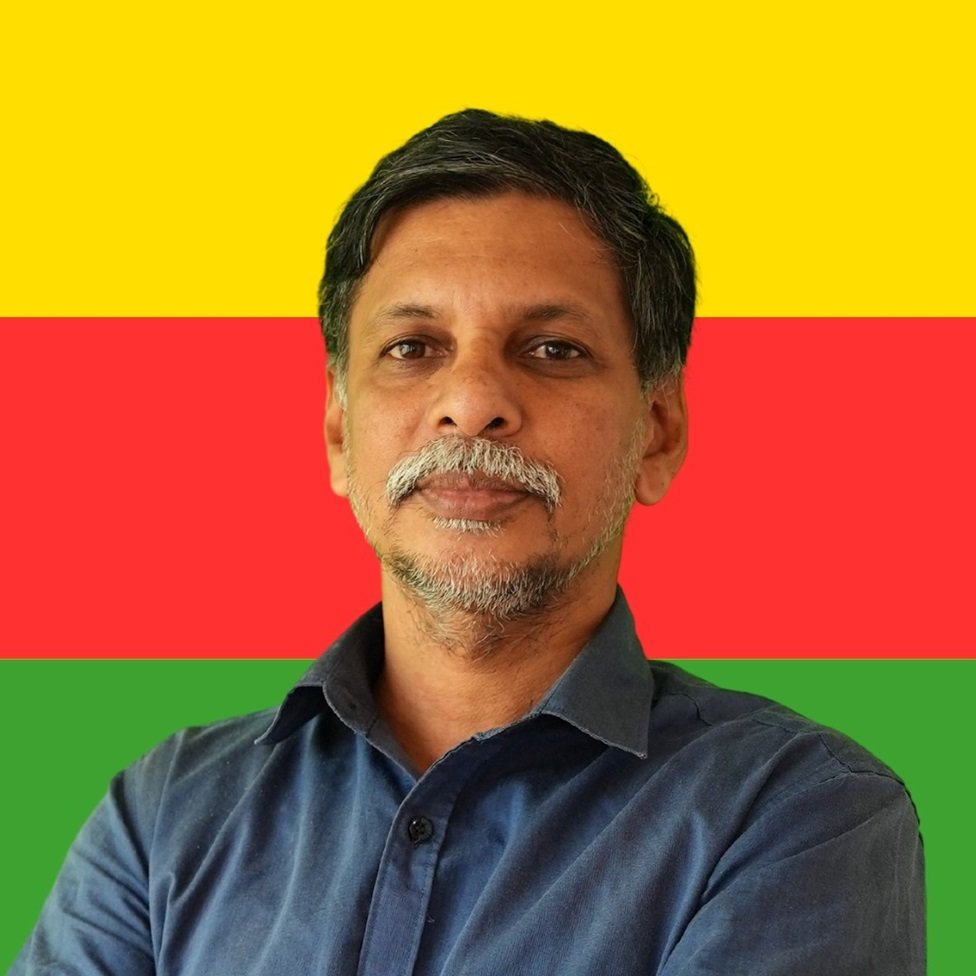
It is very important to involve Gen Z in the new constitution-making process – Political activist S.C.C Elankovan
Politically active groups and individuals are interested in a new constitution, but the general public is not as enthusiastic as it was in 2015-16. People are not seen talking about a new constitution and are more interested in other issues.
The NPP has a strong representation in the politics of the Northern and Eastern provinces and is also popular among the Tamil and Muslim populations. In this context, the people loyal to the NPP are not interested in a new constitution or power sharing. Or, their attention to these issues has significantly decreased.
There was a huge discussion about a new constitution during the 2022 Galle Face struggle, and the current government came to power with a 2/3 majority in parliament using the struggle as a platform. However, it is not seen that there is any discussion about a new constitution within the current government either. The opportunities for the government to present ideas about a new constitution in political debates and discussions are extremely limited.
It is unclear whether the NPP, which represents all ethnic groups in the country, including Sinhalese, Tamils , and Muslims, is not interested in a new constitution, or whether they simply do not have the will to do so.
“The NPP made a promise in its election manifesto that it would draft a new constitution. However, even though more than 16 months have passed since the government came to power, it has not been able to fulfill that promise,” said Elankovan.
- The role of the civil society
Commenting on the role of civil society in the process of drafting and adopting a new constitution, Elankovansaid, “Civil society has a great responsibility to restart this conversation. There is no interest or conversation among the public, just as there is no discussion among scholars about drafting a new constitution. The reason for that may be the end of the war. I wonder if they are now thinking that there is no need for a new constitution because there is no war,” Elankovan pointed out.
He pointed out that during the war, there was a discussion that included the idea that a new constitution should be drafted for the North-East Peoplebecause of the war.
- A people’s constitution
Elankovan’s view was that civil society should intervene and exert pressure for the adoption of a ‘people’s constitution’ with broad community participation.
“Even though we talk about this, it is not a conversation composed among the people and with the participation of the people; it is an academic conversation,” he pointed out.
“How can we put the process of drafting a new constitution into the hands of the people? We need to think a little. The idea among the current youth is that ‘a new country should be built’. This idea is also present among the youth community in the North and East. Also, in the past, we focused on two sides in drafting the constitution. We had the idea that power should be given to one side, and power should be divided. But, if the discussion about building a country had been taken to the youth, would it have been possible to change this system? We knew that corruption and abuse of power occur through the concentration of power. But in some countries, there is talk about decentralization of power and the supremacy of the constitution. Can we talk about a system that transfers power from the bottom level to the top?
- Who owns sovereignty?
Elankovan argued that sovereignty should rest with the people. His idea was to study separately how conflict can be created through the centralization of power.
Pointing out that the issue of power sharing should be introduced to the South in the manner indicated above, Elankovan also said that the Tamil-centric political parties in the North and East have their own individual stances.
“But we shouldn’t talk about this,” he emphasized.
“It’s a question of how they see it,” said Elankovan.
He said that during the last constitutional drafting process, the committee appointed to consult the public traveled around the country to obtain public opinions, and that over 4,000 people gave their opinions to the committee.
“Looking at the views represented there, it seems that most of them are common views. Although a significant number of people supported the executive presidential system, the majority of people were of the opinion that the executive presidential system should be abolished. At the same time, there were views that Sri Lanka should be a secular state. The limitation there was that a group of people who did not think politically were represented there.”
Elankovan pointed out that we also need to think about how Gen Z thinks and what they want.
Pointing out that more than 35 years have passed since the end of the southern insurgency and more than 16 years since the end of the North-East conflict, Elankovan also said that the current generation has no idea about either of these conflicts.
In this context, Elankovan also stated that he believes that this discussion should take place before moving towards a new constitution. He said that this idea appears to be important when considered logically, and also reminded us that there are a number of constitutional amendment efforts before us.
“We have several draft constitutions in our hands. But if society is really going to engage in this conversation, it needs to go through a proper process. We can present a new constitution and a resource model. But to engage society and create an environment conducive to drafting a new constitution, we also need to consider the views and needs of the younger generation,” he further pointed out.
Note – Thushal Withanage