Rising maritime drug trafficking poses new security threat to Sri Lanka
- Editor
- March 8, 2026
- English Header, Opinions
- opinion
- 0 Comments
- By Krishnathi Bandara
In early 2026, Sri Lanka experienced a rise in sophisticated maritime drug trafficking operations, creating serious challenges for national security and law enforcement. Drug smugglers are using new routes, international networks, and advanced methods to transport illegal drugs into the country.
One of the main concerns is the discovery of a transnational drug trafficking route linking Nepal, India, and Sri Lanka. In March 2026, authorities dismantled a major drug syndicate that transported drugs from Kathmandu in Nepal, through India’s Sonauli border, and then to Thoothukudi in Tamil Nadu before sending them by sea to Sri Lanka. Investigations have revealed that Sri Lankan drug kingpins were involved in financing and coordinating these operations, showing how organized and international these networks have become.
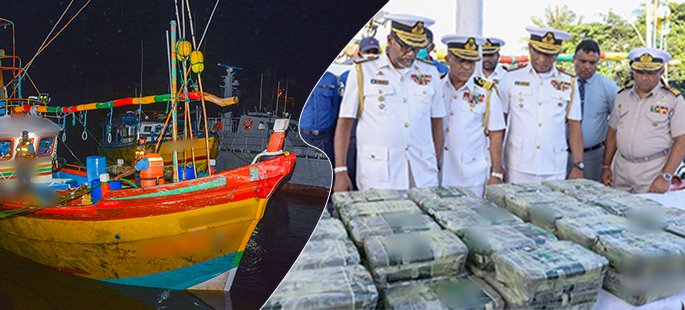
Another growing problem is the use of mid-sea transfers to avoid detection. Drug traffickers use fishing boats to transfer drugs in the open sea, especially near the International Maritime Boundary Line (IMBL). This method makes it difficult for authorities to detect and stop illegal shipments. In January 2026, the Sri Lankan Navy intercepted two trawlers in the southern seas carrying more than 184 kilograms of heroin and 112 kilograms of crystal methamphetamine (Ice), demonstrating the large scale of drug smuggling taking place in Sri Lanka’s waters.
Traffickers are also misusing the fishing industry as a cover for their activities. By pretending to be ordinary fishermen, smugglers transport drugs without attracting attention. This not only threatens national security but also harms the reputation of legitimate fishermen and coastal communities.
Another major concern is the use of digital payment systems such as eZ Cash and mCash to conduct illegal financial transactions related to drug trafficking. These mobile payment platforms allow traffickers to transfer money quickly and secretly, making it harder for authorities to track the financial networks behind drug operations.
Drug smugglers are also diversifying the types of illegal substances they transport. In addition to traditional narcotics like heroin and crystal methamphetamine, authorities have detected the smuggling of hashish oil, charas, and prescription medicines. Some individual seizures in 2026 have been valued at more than Rs. 10 crore, highlighting the profitability of the illegal trade.
To address these threats, the Sri Lankan government has launched the “A Nation United” national mission, which involves cooperation between the Navy, Army, Air Force, Police, and intelligence agencies. This coordinated effort aims to strengthen maritime surveillance and prevent drug shipments from entering the country.
The government is also reviewing legal reforms, including amendments to the Poisons, Opium and Dangerous Drugs Act and the Judicature Act, to improve control over drug trafficking on the high seas. Authorities are increasing intelligence-led maritime patrols and strengthening international cooperation with regional partners to intercept drug shipments before they reach Sri Lankan waters.
However, further measures are needed. The government must strengthen coastal monitoring, regulate digital financial transactions used for illegal activities, improve cooperation with international agencies, and ensure faster processing of Government Analyst reports needed for drug-related prosecutions. Public cooperation is also important, and authorities have encouraged citizens to report suspicious coastal or maritime activities through the 1818 and 1997 hotlines.
Overall, the rise of maritime drug trafficking poses a serious threat to Sri Lanka’s security and stability, requiring strong and coordinated action to prevent the country from becoming a major transit point for international drug networks.