How can the proposed ‘Directorate of Public Prosecution (DPP)’ be effectively made a reality?
- Editor
- February 9, 2026
- English Header, Opinions
- opinion
- 0 Comments
The 260th session of the ‘Kathikawa’ series, organized by the National Movement for Social Justice every weekend, was held last Sunday (Feb. 01) under the theme How can the proposed Public Prosecution Office be effectively made a reality?’. The resource persons for the discussion were former Senior Additional Solicitor General, Attorney-at-Law Srinath Perera, Prof. Dinesha Samararatne, and Prof. Deepika Udugama, and journalist Shan Wijethunga moderated the discussion. This article has been compiled based on this discussion.
The proposal to establish an independent public prosecutor’s office was mentioned in the ‘A Thriving Nation – A Beautiful Life’ policy manifesto submitted by the National People’s Power for the last presidential and general elections, in the sub-section entitled ‘The Attorney General’s Department’ in the chapter ‘Rule of law – A judicial system with equal access’.
“Introducing a Directorate of Public Prosecution (DPP) as a mechanism to eliminate delays within the judicial system and establishing a main DPP office and sub offices in the provinces, which will remain independent of the Attorney General’s Department to conduct cases on behalf of the government.” (page 113)
Moreover, the International Monetary Fund (IMF) had also proposed this in 2023.
The government made several attempts last year to establish an independent prosecutor’s office. Accordingly, in February 2025, the Minister of Justice appointed a committee, and the committee’s report was submitted to the Minister of Justice in October 2025. Thereafter, steps have been taken to prepare a concept paper.

Why does the Attorney General’s Department need reforms and restructuring? – Professor Dinesha Samararatne
There are several areas that have not been addressed in the discussion on the establishment of an independent prosecutor’s office, and it is important to address these issues from the perspective of constitutional law and common law. Also, answers should be found in this regard logically and systematically, with examples.
When considering the proposal to establish an independent prosecutor’s office, it has only been circulated as an ‘idea,’ and we have not received any further details. In this context, three questions arise:
- Should this proposal be implemented?
- If so, how should it be implemented?
- On what basis?
There is a conversation taking place in the national media, including newspapers, and on social media regarding this issue, and in my opinion, we have three options.
The first option is to study and reform the Attorney General’s Department as a whole as an institution. This approach would require constitutional reform, legislation, statements of principles, and a code of ethics.
The second option is a “business-as-usual” (BAU) approach with limited focus on criminal prosecution. Here, only the prosecution function should be reformed. Two options have been identified here. These are: establishing a prosecution office within the Attorney General’s Department (internal separation), establishing a prosecution office outside the Attorney General’s Department (separation), and thereby making the Attorney General’s Department functional. (This option is being discussed in society nowadays).
The third option is to completely restructure the Attorney General’s Department and transfer its core functions to newly established independent institutions.
- Why are reforms needed?
In any reform, the question should be asked, ‘Why should there be reform?’ There is considerable understanding in society regarding the Attorney-General’s Department.
The establishment of an independent prosecution service is not just a legal problem to be solved. It also involves a political and social problem. Here, attention should be paid to the problems with the Attorney General’s Department. In general, there are a number of problems with the Attorney General’s Department. Among them, the delay in proceedings (sometimes taking up to 17 years), the politicization of the implementation of common law, the imposition of harsh penalties against the destitute, the low percentage of convictions (4%?), the lack of transparency in decisions, the conflict of interest that arises within one institution, the lack of retribution for the guilty, the lack of justice for the victims or severely delayed justice, the lack of, or poor representation of our interests in common law matters, and the promotion of legislation, policies and other decisions that often harm our rights and prosperity.
From the above, it is clear that there are problems and weaknesses in the Attorney General’s Department that have created a significant negative perception among the public regarding the Attorney General’s Department.
- Currently proposed solution
The Sri Lankan criminal justice system and its institutions have long failed to uphold the rule of law and justice for several reasons. However, it is somewhat problematic to see this as a problem limited to criminal law alone. This is a complex situation, and we can see this problem in the implementation of all laws, including administrative law, constitutional law and international law.
The current discussion centers on an election promise made by the current government and the steps taken by the Ministry of Justice. There are several issues that we need to consider in the discussion on this solution. If there is agreement among us on the problematic situation outlined above regarding the Attorney General’s Department, we need to examine the extent to what extent we can obtain solutions from the ‘proposed solution’.
We cannot obtain direct solutions to the constitutional problems regarding the Attorney General’s Department through the proposed reform.
When it comes to the Attorney General’s Department, most of its work is done according to ‘agreements’. The proposed plan can document these agreements to some extent (in the area of criminal justice). But there are also a number of agreements that need to be documented. Beyond that, we need to consider how the organizational culture of the Attorney General’s Department, including negative perceptions of ethics, can be changed.
There are also issues related to ethical conduct in the Attorney General’s Department, and finding solutions to these is largely related to public and legal education and professional training.
Another important point to note here is to keep in mind that the Attorney General’s Department works with several other institutions. (such as the Police, the Ministry of Justice) Structural problems within these institutions also directly affect the performance of the Attorney General’s Department’s tasks.
Therefore, our argument is that if we are going to discuss only an independent prosecutor’s office, then when studying the Attorney General’s Department, why should we limit ourselves to a discussion of reforming it in parts or only in part?
Beyond that, the question remains as to how the very important functions of the Attorney General’s Department can be continued and how solutions can be found to the problems that arise from it.
In addition, we must also examine whether this proposal has the potential to achieve a sustainable solution to the key factors affecting the issues we are discussing.
- Other important considerations
It’s needed to focus on how to democratize a reform process initiated by a government based on certain political interests, and how to ensure that it focuses on our rights, our freedoms, and our well-being.
We also need to pay more attention to what the ‘first principles’ are that we should focus on for such reform initiatives, and how do we subject the reform process to our scrutiny and debate, and how do we ensure that it is evidence-based, rational, and applies first principles?
- Is an independent prosecutor’s office needed?
This has been a debate for a considerable period of time and has been discussed intermittently for about 30 years. When considering the Attorney General’s Department, especially in terms of the constitution, it is clear that discussing only the Attorney General’s Department is not enough.
The Attorney General’s Department has been in operation for 142 years, and due to the lack of reforms, constitutional democracy has been damaged. We need to understand the damage and discuss the Attorney General’s Department as a whole. This is not impossible, and we can do what can be done and think about the remaining later.
For this, the Constitutional Reform Act 2005, passed by Britain in 2005, can be taken as a model. Through this act, the British judicial system was completely restructured after almost a century, and the reforms expanded to include the appointment of the Chief Justice through the publication of advertisements and conducting interviews.
Such restructuring and reform can be done in Sri Lanka as well. We should focus on such positive trends.

Even though 100% results cannot be achieved at once, we must go for this reform – Professor Deepika Udugama
There is no indication that a concept paper has been released regarding the establishment of an independent prosecutor’s office. However, the current discussion is not limited to the establishment of an independent prosecutor’s office. There is currently a discussion in the country regarding various types of reforms, including constitutional reforms, electoral reforms, etc.
But in a discussion about the Office of the Prosecutor, attention should be paid to the question of what the ‘main principles’ are. The reason for this is that it is impossible to know whether a reform in this country has been 100% successful. This is not a situation that exists only in Sri Lanka. No reform in any country is 100% successful.
- Countries that can be emulated
Explaining her position on the Independent Prosecutor’s Office, Professor Deepika Udugama said: “We should look at finding solutions to the current pessimistic situation in the Attorney General’s Department gradually. In my opinion, it would be very good if there is a poll. It would be better if a concept paper is presented to the public and their views were sought. The structural options available in this regard are very clear. Since we got our judicial system during the British colonial era, we often look at the examples of Commonwealth countries. We can get a number of examples from Commonwealth countries. The best example for this is Great Britain. The Attorney General’s Office, which operates domestically, and the Attorney General’s Office, which advises the government, have been established separately. But both operate under the supervision of the Attorney General. Also, the Attorney General even participates in cabinet meetings. But due to the long-standing political tradition, we do not see that the Attorney General has been subjected to political influence.”
- The challenge for Sri Lanka
Explaining the challenges facing Sri Lanka, Professor Deepika Udugama pointed out that ‘structural reforms are very important’.
“This is extremely important. There is a very clear conflict of interest between the duties of our Attorney General. There is a huge conflict of interest between giving advice as the legal advisor to the government and acting as the prosecutor of the government,” said Professor Deepika Udugama, emphasizing that “this is why structural changes must be made.”
She pointed out several important points that need to be demonstrated while carrying out these structural reforms.
“We need to point out what the basic principles should be. Also, fundamentally, the independence of the Independent Prosecutor’s Office should be ensured. Accordingly, we need to have a clear idea regarding appointment, removal, role, financial allocation, and other resources. Also, how will the Independent Prosecutor’s Office function? Will it operate only within the main office in the capital, or will it establish offices in the provinces? We need to consider structural issues in depth,” Professor Udugama further explained.
- Reasons to be afraid
The professor further pointed out that even if the above-mentioned issues are clearly included in a law to be formulated in the future, attention should be paid to protecting its independence at the practical level.
Explaining her position further in this regard, Professor Deepika Udugama also stated, “Several senior lawyers I know do not like this proposal. They do not like this because reforms are not needed, but because they have great fear. When we look at our history (including recent history), we can say that ‘despite the many reforms that have been carried out, have the desired results been achieved at the practical level?’ There is a question that arises. The Constitutional Council itself can be cited as an example of this. We all expect that the nominations for the Independent Prosecutor should be approved by the Constitutional Council. Here, we conclude that the Constitutional Council will consider this in a very excellent and mature manner and propose the names of suitable persons, otherwise it will approve. But there is a fear that ‘will it happen?’ But it is not a good thing to not make such reforms because of such fear, or apprehension.”
- Main problem
Professor Udugama said that the main problem regarding the establishment of the Independent Prosecutor’s Office in Sri Lanka is not ignorance of the facts, and pointed out that there are experts who are capable of developing a model or alternative model suitable for Sri Lanka.
Emphasizing the importance of establishing an independent prosecutor’s office, Professor Deepika Udugama also said, “It can be done, but I think the main challenge we have is how to structurally protect its independence very strongly. Whether an independent prosecutor’s office is established as a separate office or within the Attorney General’s Department, the difference here is that the basic role of the Attorney General will change significantly. That means that the role of the Attorney General is basically limited to giving advice. That is why we can expect some change. But my opinion is that this reform should be carried out gradually, even if it is not possible to achieve 100% results at once.”

“An independent prosecutor’s office is not a place like a shop where to buy things” – President’s Counsel Srinath Perera
The question is whether the establishment of an independent prosecutor’s office is a necessary change, and it is fundamentally important to understand the reasons for making that change.
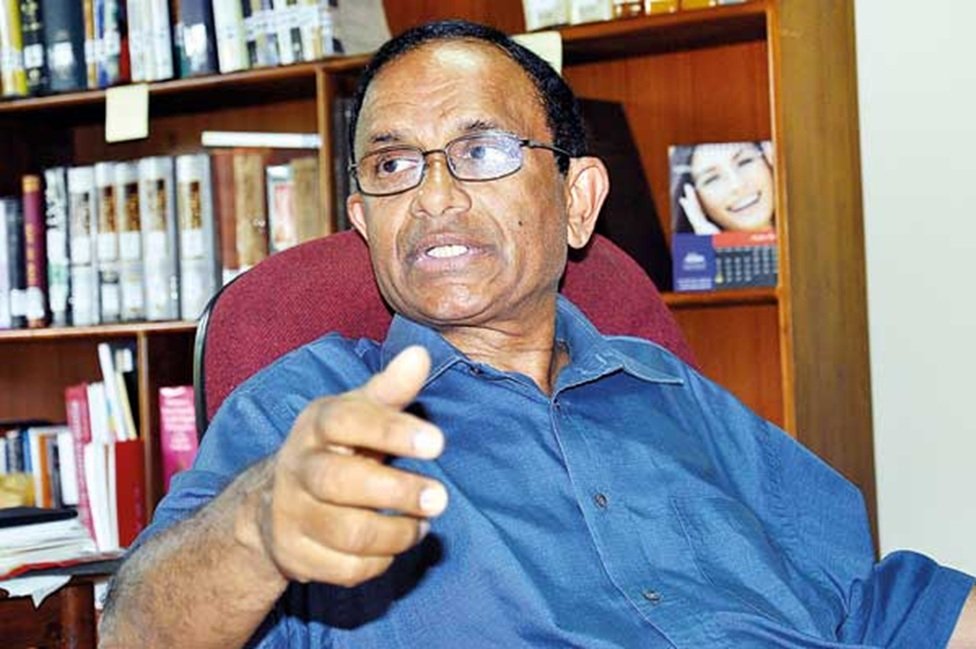
“I served in the Attorney General’s Department for 22 years and retired as the Senior Additional Solicitor General. When I retired, the then-President invited me to assume the position of Attorney General. However, since there were three seniors to me, I did not want to accept the position of Attorney General. Therefore, I have some affinity towards the Attorney General’s Department.” Mr. Srinath Perera, taking an approach to the discussion, gave a brief explanation about himself.
- What does the Attorney General do?
“My question is that there is a need to make changes in various places. There is no problem with that. Changes should be made where they need to be made. But the problem is this: if the change is only made to announce to the world that changes have been made, that change will not be effective. The Attorney General’s Department is a 142-year-old institution. The Attorney General’s Department performs three main functions. Conducting criminal prosecutions and providing advice on them, engaging in civil litigation of the government, and advising the President and the Cabinet on legal issues related to state departments. The Attorney General’s Department has performed this function for the past 142 years.”
- Disadvantages
Mr. Srinath Perera said that although the Attorney General has performed three main functions over the past 142 years, he also admits there have been some shortcomings in their performance.
“There is no objection about that. But if there were such shortcomings, can we investigate the reasons that led to those shortcomings, correct them, and move forward? If that is not possible, then only if it is essential to make a change for the betterment of society, those changes should be made,” said Mr. Srinath Perera.
Perera said that the independence of the public sector was affected by the implementation of the 1978 Constitution, and that the reason for this was that a single person received unlimited powers under the 1978 Constitution. Elaborating further on this matter, he said that the Executive President received unlimited powers to make appointments, promote, and dismiss.
“I think the public service has already lost its independence to some extent. But I think the Attorney General’s Department has preserved its independence to some extent. There is no argument about that. But the Sri Lanka Police, the Criminal Investigation Department (CID), have become a pawn of the government in power to some extent (correct me if necessary). It is in this situation that the Attorney General’s Department has preserved its independence to some extent and is moving forward.”
Mr. Srinath Perera repeatedly acknowledged that there are certain shortcomings in the Attorney General’s Department and also acknowledged that there are significant delays in processing cases. Pointing out that the Attorney General’s Department should not be blamed for these matters, he explained that several factors, including the shortage of officers, directly affect these delays.
“Attorney General’s Department has only 250 officers. And there are still many vacancies so far. If we take Singapore, there are more than 2,000 officers involved in the law enforcement process. In this situation, if there is a problem of delays, the appropriate solution is to increase the number of those officers and reduce the pressure on those officers,” Srinath Perera illustrated the extent of the crisis facing Sri Lanka.
He also said that he is concerned about whether dismantling the Attorney General’s Department and establishing a new one will lead to the advancement of society due to certain shortcomings.
“An independent prosecutor’s office is not a place like a shop where to buy things,” the former Senior Additional Solicitor General emphasized.
The government should immediately inform the relevant parties about the purpose of establishing an independent prosecutor’s office, he noted.
“I still don’t understand what the need is for an independent prosecutor’s office. So please explain it to us,” Srinath Perera reiterated.
Note – Thushal Withanage