Sri Lanka’s Bailout Blues: Elections in the Aftermath of Economic Collapse
- Editor
- September 17, 2024
- English Header, Political
- Political
- 0 Comments
The economy is central in Sri Lanka’s presidential race, with many voters unhappy with austerity measures the incumbent has taken following International Monetary Fund recommendations. In the interest of stability, the winner should ensure that the belt tightening’s effects are more fairly distributed in society.
What’s new? Two years after Sri Lanka’s economy imploded and its president resigned amid mass protests, the country has returned to modest growth. But hardship and anger at the political establishment fester, and opposition to economic reforms is likely to shape the outcome of the presidential election on 21 September.
Why did it happen? Years of under-taxation, weak exports and over-reliance on debt, combined with the COVID-19 pandemic and major policy errors, triggered the 2022 economic meltdown and political crisis. Tax hikes and lost subsidies since then have hit many Sri Lankans hard, while sparing many of the country’s wealthy and powerful.
Why does it matter? Despite a bailout from the International Monetary Fund (IMF), the risk of return to debt distress remains high – as does the possibility of renewed unrest and political turmoil. The election offers Sri Lanka a chance to reconsider the direction of the reform program and correct some of its worst flaws.
What should be done? The next government should work with the IMF to ensure the burdens and benefits of economic reforms are shared more equally and can win broad public support. These steps should be backed by a strengthened anti-corruption drive and additional debt relief to give the government more fiscal breathing space.
Executive Summary
With a presidential election due on 21 September amid widespread economic misery, 2024 is a pivotal year for Sri Lanka. President Ranil Wickremesinghe has enjoyed some success carrying out International Monetary Fund (IMF) reforms, but millions of Sri Lankans mired in poverty and debt have yet to feel much relief. Wickremesinghe came to power in July 2022 after his predecessor Gotabaya Rajapaksa was forced to resign following waves of mass protest; but he owes his appointment to the Rajapaksa clan’s political party, and he has relied on it for his majority in parliament. While that relationship has helped the president undertake sweeping reforms to right Sri Lanka’s listing economy, it has sapped his public support. His aggressive response to dissent – including curbing protests and drafting tough new security and media laws – has stoked tensions. For economic reforms to be sustainable and bring respite to hard-up Sri Lankans, the next government should distribute the burdens of austerity more equitably while addressing the corruption and misgovernment that contributed to economic collapse. Its creditors, for their part, should accept that more generous debt relief is likely necessary.
Sri Lanka’s meltdown in 2022 – when lack of hard currency to pay for imports led to crippling shortages of food, fuel and medicine – had deep roots. Years of extremely low taxation and high budget and trade deficits led to debt levels that reached a breaking point when combined with global disruptions resulting from the COVID-19 pandemic and major policy errors by the government of Gotabaya Rajapaksa, who was elected president in late 2019. An overly powerful presidency, lack of independent oversight bodies, and a pliant police and judiciary fostered Rajapaksa’s mismanagement; his brother Mahinda’s presidency, from 2005 to 2015, had also witnessed largely unchecked high-level corruption. As Sri Lanka’s economy teetered, a nationwide protest movement emerged to demand immediate relief and the departure of Gotabaya and his clan from office, along with judicial accountability for their actions. Protesters called for a radical overhaul of the political system as well as constitutional reforms to strengthen democracy.
After Rajapaksa resigned in July 2022, parliament selected Wickremesinghe to replace him, and the new president moved quickly to shore up economic stability. He resolved the most urgent shortages and took austerity measures to balance the books in preparation for an IMF bailout, eventually approved in March 2023. With support from the Central Bank, and in part thanks to natural cyclical processes, inflation has fallen from historical highs to single digits; interest rates have come down; and currency reserves have increased. Major economic reforms are under way, as part of the IMF package, and negotiations with creditors on essential debt restructuring are nearing completion. The modest scale of the relief, however, will still leave Sri Lanka’s debt at precarious levels and the economy vulnerable to external shocks, even if the tough fiscal targets are met.
Improved economic indicators … have offered little relief to millions across [Sri Lanka], with poverty rates more than doubling since 2020.
Improved economic indicators, meanwhile, have offered little relief to millions across the country, with poverty rates more than doubling since 2020. Government responses, including a new and much-touted anti-poverty cash transfer system, have failed to meet the needs of many citizens, especially women and youth. Hundreds of thousands have left the country to find employment abroad, including many of the island’s best-educated professionals.
Given the extent of the economic debacle, some degree of belt tightening was inevitable. But many Sri Lankans consider the government’s new policies to be unfair in the way they have been targeted. Fiscal reforms such as tax increases and higher utility prices have been shouldered by poor and middle-income Sri Lankans, while economic and political elites, including those who designed and benefited from the policies that led to the crisis, have been left largely unscathed. Key decisions have been made by a government including senior ministers who approved the policies that precipitated the crisis and relying on the same parliamentary majority that backed it then. The lack of action against the alleged corruption of the Rajapaksa family and its cronies, as well as some in Wickremesinghe’s United National Party, has fuelled public perceptions of injustice.
The president’s gamble to shun the sweeping governance reforms demanded by protesters in exchange for the stable parliamentary majority needed to pursue economic adjustment will now be put to the test at the polls. Running as an independent candidate backed by an ad hoc coalition, including much of Rajapaksa’s Sri Lanka Podujana Peramuna, President Wickremesinghe is presenting himself as a “non-partisan” candidate committed to completing the economic recovery with IMF backing. Opinion polls indicate he is trailing his two main competitors, Sajith Premadasa, head of the Samagi Jana Balawegaya, and Anura Kumara Dissanayake, leader of the left-leaning National People’s Power coalition. Both have pledged to renegotiate the IMF agreement to reduce the strain on working people, but neither has detailed how he would do so. What looks to be the country’s first-ever three-way race could prove tight and tense. In another precedent, it may be decided by voters’ second and third preferences.
Irrespective of the final electoral result, voters’ demands are likely to focus on the outstanding flaws of economic reforms. Over the long haul, these reforms are unlikely to succeed unless they begin to distribute the costs of austerity and benefits from broader structural reforms more equitably, while ensuring greater transparency and accountability in government. Efforts to strengthen the cash transfer program for Sri Lanka’s poor, bolster anti-corruption reforms, slim the military budget and foster a full, informed public debate on liberalising reforms of the state could all play a part in achieving these goals. For their part, the IMF and international creditors should begin to develop options for additional debt relief, while the Fund should be willing to show flexibility in its requirements for budget surpluses so long as Sri Lankan authorities can show they are committed to further increasing state revenue.
If these polls are handled responsibly by all sides, and the public sees the final result as credible and legitimate, Sri Lanka could have an opportunity to begin addressing both the unfairness of the current adjustment program as well as the roots of economic mismanagement and political misrule that led to the 2022 collapse. Far from flinching at the prospect, allies, donors and lenders should be ready to listen to the verdict of the ballot box.
Colombo/Brussels, 17 September 2024
I.Introduction
In early March 2022, Sri Lanka’s economy imploded, spurring a political crisis unlike any the country had seen before.1 Queues for petrol lasting days and massive crowds occupying government offices marked the onset of Sri Lanka’s debt predicament and its first-ever default that April. On 13 July, nationwide protests demanding “system change” forced the resignation of President Gotabaya Rajapaksa. A week later, parliament selected Prime Minister Ranil Wickremesinghe to serve the remaining two and a half years of his presidency.
Upon taking office, President Wickremesinghe, ruling with the support of Rajapaksa’s Sri Lanka Podujana Peramuna (SLPP) party, clamped down on protests questioning the legitimacy of his succession. He has since overseen the stabilising of Sri Lanka’s economy while committing to a major economic reform program as part of a $2.9 billion bailout deal with the International Monetary Fund (IMF) that formally began in March 2023. The government’s agreement with the IMF – known as an Extended Funds Facility (EFF) – commits it to an extensive list of politically and economically difficult reforms over a four-year period.2
At the top of the IMF program’s priorities is to reduce Sri Lanka’s chronically large budget deficits.
At the top of the IMF program’s priorities is to reduce Sri Lanka’s chronically large budget deficits, principally through raising its extremely low rates of taxation. The program aims to do so while still protecting Sri Lanka’s “most vulnerable” through “better targeted” anti-poverty cash transfers.3 Essential to the IMF plan is for Sri Lanka to reduce its debt, especially to foreign lenders. To do so, the government has pursued debt restructuring negotiations with foreign governments and international commercial creditors. To “unlock Sri Lanka’s growth potential”, meanwhile, the IMF program promotes a series of “structural reforms” designed to encourage foreign and private investment, boost exports, and “reduc[e] the government’s … role in the economy”.4 A key, but controversial, aspect of this liberalising agenda is to privatise or otherwise restructure state-owned companies, many of which are chronically loss-making. More popular with the public – but so far challenging for political leaders to put in practice – is an IMF plan to tackle the country’s many and deeply entrenched sources of corruption.
This report examines the roots of the economic and political crisis that led to Wickremesinghe becoming president and outlines his government’s attempts to stabilise the country. It examines the main challenges posed by the IMF program and the ways in which reforms could win greater public support. It also considers the possible outcomes of and risks surrounding the forthcoming presidential election, in which the two leading candidates are calling for the IMF agreement to be revised. The report draws on interviews with economists, social activists, business owners, trade unionists, women activists, academics, religious leaders, politicians and diplomats, almost half of whom were women, conducted in person in Sri Lanka and by telephone or video conference between November 2022 and August 2024.
II.The Economic and Political Crises of 2022
A.Economic Collapse
The economic crisis that came to a head in April 2022 was long in the making. Since the mid-1990s, Sri Lanka had run increasingly large budget deficits, due mostly to its efforts to maintain a modest welfare state on the basis of progressively declining tax rates.5 At the same time, it ran chronic current accounts deficits, as income from exports, tourism and remittances from overseas workers failed to cover the cost importing oil, petrol, cooking gas, food, medicine and consumer durables. Unable to develop new and more profitable export markets, successive governments financed deficits through international borrowing. After the country’s graduation to middle-income status in 1997, however, Sri Lanka gradually lost the ability to borrow at concessionary rates. From the early 2000s, it was increasingly relying on issuing sovereign bonds on international credit markets alongside commercial loans from various Chinese sources, both at high interest rates.6 By April 2022, the central government’s total outstanding external debt was $34.8 billion, with total public debt reaching 126 per cent of GDP.7
While President Maithripala Sirisena, who served from 2015 to 2019, made modest attempts to address the country’s mounting debt, his successor Gotabaya Rajapaksa quickly reversed course. He enacted large-scale income tax cuts that took effect in early 2020, reducing government revenue by a quarter. Almost immediately afterward, COVID-19 struck, and the resulting global recession did not spare Sri Lanka. Tourism, one of the country’s principal sources of revenue, already hit by terrorist attacks in April 2019, came to a standstill.8 Remittances dropped precipitously. Domestic economic activity contracted by 4.6 per cent in 2020, due in part to extended nationwide lockdowns.
President Rajapaksa’s sudden ban on the import of chemical fertiliser and pesticides in April 2021 as part of an ill-advised effort to promote organic farming and save hard currency caused further damage to the national economy. Harvests of tea – one of the country’s major exports – plummeted. Rice production dropped by 20 per cent; whereas previously the country had been self-sufficient in the staple, it was now forced to buy it from abroad. The total cost of imports necessary to make up for reduced domestic production exceeded what was saved in fertiliser and pesticide costs, deepening the budget and currency deficits.
To cover gaps in the budget, the Central Bank printed money, which added to already strong inflationary pressures. To maintain the value of the Sri Lanka rupee (and prevent a surge in the cost of imported goods), the government also drew down its limited foreign currency reserves, even as billions of dollars in debt were due for repayment in 2022. Despite increasing warnings from economists and admonishments to seek assistance from the IMF, President Rajapaksa and his advisers, all of whom are longstanding economic nationalists, maintained they would devise “homegrown solutions” to the country’s debt and currency problems.9 The emptiness of that promise became plain by the end of March 2022: with global prices of oil, wheat and other essentials surging due to the war in Ukraine and supply chain disruptions related to COVID-19, Sri Lanka in effect ran out of foreign reserves. On 4 April, it officially announced it was defaulting on its foreign debt payments and requested support from the IMF.
B.The Aragalaya Protest Movement
By early 2022, economic hardship had spurred growing public protests. Lack of hard currency and high global prices had led to shortages of petrol, electricity (generated in part by imported oil and coal), cooking gas and medicine – not to mention rice, wheat and other basic foodstuffs. Small-scale protests in Colombo’s middle-class neighbourhoods, many led by women, slowly grew. On 31 March, demonstrators congregated outside President Rajapaksa’s private residence; security forces violently dispersed them. The government declared a state of emergency, but over the next few days much larger crowds gathered on the streets, forcing Rajapaksa’s entire cabinet, but not the president himself, to resign.10
The largely middle-class and Colombo-based protests were soon reinforced by student, trade union and farmer organisations that had been agitating against various government policies across the country since mid-2021. On 9 April, protesters, brought together under the slogan (and hashtag) “GotaGoHome” (“Gota” being the widely used nickname for Gotabaya) established the GotaGoGama (“GotaGo Village”) encampment outside the presidential secretariat on Colombo’s iconic Galle Face Green, calling for the president’s resignation. Widely known by the Sinhala words for “people’s struggle”, janatha aragalaya, or simply aragalaya, the protest movement initially focused on the shared demand for economic relief. But demonstrators soon took up cries for the ruling family and its cronies to be held accountable, including demands that they return assets believed to have been stolen and hidden overseas. Over four and a half months of nationwide protests, sections of the aragalaya developed a wider critique of the mismanagement, corruption and unchecked executive power that many Sri Lankans saw as the sources of the economic crisis.11
Eventually, the movement coalesced behind the catchphrase “system change”, evoking desire for radical reform of Sri Lankan politics. Protesters moved from calling for the Rajapaksa clan’s ouster to insisting that the whole parliament resign. Popular demands for an end to corruption and the entrenched power of the political class combined with longstanding calls to abolish the powerful office of executive president and end the partisan misuse of the civil service, judiciary and security forces – and the impunity – that has come with this presidential system.12
Overlapping networks, broadly sympathetic to one another, were unified by the desire to end the Rajapaksas’ rule and bring about major political reforms.
Key to the aragalaya’s success was the fact it brought together poor, lower middle-class and privileged Sri Lankans, ranging across a wide ideological spectrum, under one umbrella. Its focus on shared economic suffering and the political causes thereof also enabled it to elude temporarily the religious and ethnic divisions that have long dominated Sri Lankan society and politics. Like “occupy”-style protests in other countries, the movement had no central leadership. Overlapping networks, broadly sympathetic to one another, were unified by the desire to end the Rajapaksas’ rule and bring about major political reforms. The aragalaya’s popularity helped compensate for the political weakness that came with the lack of coherent leadership and organisation.13
On 9 May, the aragalaya encountered its first major challenge when angry government supporters destroyed the GotaGoGama encampment, beating protesters as police largely stood by.14 More surprising than the attack was the sight of protesters fighting back, leading the pro-government mob to flee. Later that evening, across the country, anti-government protesters attacked the homes of roughly 100 ruling-party politicians, burning many to the ground. Who exactly organised the retributive violence remains unclear, but it tarnished the aragalaya’s reputation as peaceful and hardened attitudes among government and ruling party officials toward the movement.15 The next day, Mahinda Rajapaksa resigned as his brother’s prime minister. On 11 May, after intense negotiations, the president appointed Wickremesinghe, leader of the once powerful United National Party (UNP), as prime minister.16
Two months later, on 9 July, massive crowds flooded the capital, responding to calls from a wide range of groups to join the final push to dislodge Gotabaya Rajapaksa. The throng proved too much for security forces to handle: thousands surged into the president’s official residence and offices and proclaimed them open to the public, leading to two weeks of peaceful occupation. After four days in hiding, Rajapaksa flew out of the country on 13 July, the same day protesters stormed the prime minister’s office and unknown forces later burned down his private residence.17 Rajapaksa formally resigned the next day, making Wickremesinghe acting president. A week later, on 20 July, parliament elected him to serve out the remaining two-and-a-half years of Rajapaksa’s term.18
At the time, Gotabaya’s resignation represented the aragalaya movement’s greatest achievement. But it also paved the way for a program of short-term stabilisation and crisis management that would quickly eclipse the movement’s push for deeper political reforms, while enabling parts of the political establishment that the movement has vehemently opposed to entrench themselves.
III.The Wickremesinghe Presidency
Immediately upon assuming office, Wickremesinghe adopted a strategy aimed at stabilising the country. Designed to contain the immediate economic crisis, the new president’s policies also sought to tighten his grip on power so he could push through unpopular reforms with IMF backing. Despite praise for returning the country to a path of modest growth, the government has been accused of authoritarian leanings, while its reforms have also contributed to the closure of businesses, a sharp rise in poverty and an exodus of skilled workers.
A.The Promise of Stability
Upon taking office, the new president continued the work he had begun as Rajapaksa’s prime minister to address the most urgent and crippling economic needs. These included power cuts that extended as long as thirteen hours a day, as well as shortages of petrol and cooking gas that saw people standing in lines for several days.19 Through careful marshalling of limited hard currency reserves, the government was able to earmark money to import the fuel needed to power the national electricity grid as well as supply the cooking gas essential in most Sri Lankan kitchens. Meanwhile, the rollout of a rationing system using digital QR codes rapidly shortened queues at petrol stations. Together, these moves helped dispel the sense of imminent economic collapse and assuaged the concerns of a large segment of the wealthy and middle class in Colombo, whose political, financial and moral support had played a crucial role in the aragalaya’sgrowth.20
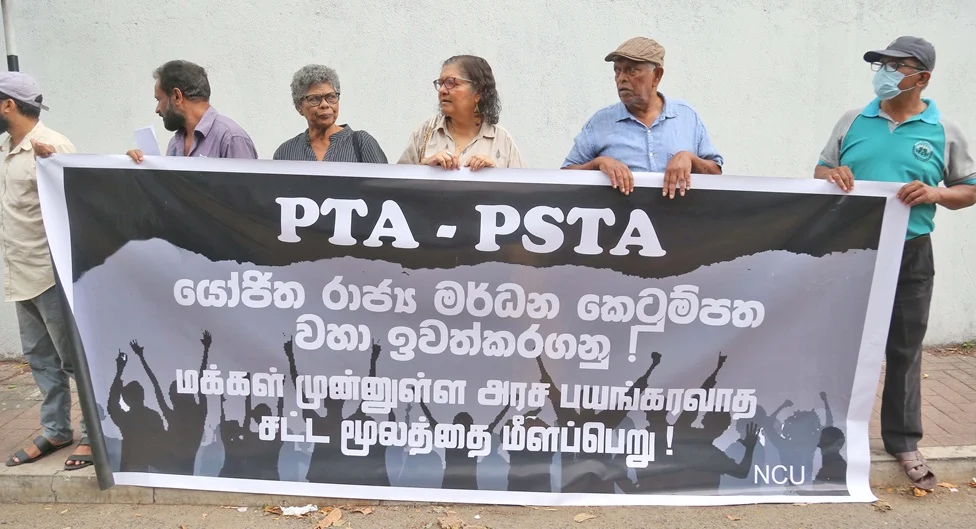
Alongside these emergency steps, a second pillar of Wickremesinghe’s stabilisation strategy proved far more controversial. The president ordered an immediate crackdown on street protests, beginning with an order on 22 July to clear what was left of the GotaGoGama encampment near the presidential secretariat. Arrests of key protest leaders followed, in some cases under the Prevention of Terrorism Act (PTA), as did a policy of using court orders and deploying the police and army to clear anti-government protests, especially those led by the leftist Inter-University Student Federation.21 With new measures removing or mitigating the most obvious signs of economic crisis, especially for the better off, the government could more easily demonise the remnants of the aragalaya as disruptive and threatening to the possibility of economic recovery.22
Worries about an authoritarian turn by the Wickremesinghe government deepened with the March 2023 release of draft legislation for a new Anti-Terrorism Act (ATA), designed to replace the draconian PTA, which the government had promised the European Union and UN it would repeal.23 The ATA’s broad definition of terrorism and expanded powers of detention and proscription prompted criticism from the EU and individual Western governments, as well as furious rebukes from Sri Lankan civil society organisations and opposition parties.24 The Online Safety Act, approved by parliament in January 2024, has also been held up by critics as a grave threat to free speech and democracy, as have other draft laws that aim to regulate broadcast media and non-governmental organisations.25
Thirdly, Wickremesinghe has sought to avoid major reform of Sri Lanka’s system of governance and declined to demand judicial or electoral accountability from the nation’s leaders. Part of the reason is the political constraints upon him: retaining the support of the Rajapaksa-led SLPP and its majority in parliament depends on foiling aragalaya demands that the executive presidency’s powers be trimmed and that state officials be held accountable for misuse of office. Instead, the Wickremesinghe government secured a largely ineffectual amendment of the constitution that restored a modicum of independence to oversight commissions for the police, human rights and other issues.26 Wickremesinghe’s reliance on SLPP support has also inhibited investigations into alleged cases of corruption involving the Rajapaksa family or the economic mismanagement that led to the 2022 crisis.27
Wickremesinghe has sought wherever possible to avoid elections, relying on controversial procedures … to postpone indefinitely local government polls.
In addition, Wickremesinghe has sought wherever possible to avoid elections, relying on controversial procedures – later ruled unconstitutional – to postpone indefinitely local government polls scheduled for 9 March 2023.28 Needing the support of the SLPP parliamentary majority to get through as much of his economic program as possible, the president also rejected widespread calls for early parliamentary elections (due no later than August 2025).29
Finally, by defanging the aragalaya, retaining the support of the SLPP and postponing elections, Wickremesinghe acquired the political leeway to introduce a series of unpopular austerity measures designed to prevent the country from falling into even more dire financial straits and prepare the ground for final approval of an IMF bailout.30 In particular, his government took three key steps to reduce the government’s ballooning budget deficit: it increased taxes, removed subsidies that had kept fuel and electricity rates below cost and, in early 2023, imposed a 6 per cent spending cut on all government departments. Wickremesinghe’s policies were assisted by, and built on, a series of policy changes the Central Bank had adopted. While several of the bank’s measures made economic sense, such as no longer printing money to cover state expenses and ceasing to (artificially) prop up the Sri Lankan rupee’s value, in combination they contributed to a spike in prices for basic goods, generating more hardship for poor and working-class Sri Lankans.31
B.The Human Cost of Austerity
With the Sri Lankan economy hit by the absence of fresh international credit and much reduced foreign currency inflows, the austerity measures mentioned above prolonged an already severe recession. After contracting by 7.3 per cent in 2022, GDP shrank by another 2.3 per cent in 2023. Small and medium-sized businesses were starved of affordable credit, and they saw the cost of servicing their existing loans, as well as fuel and electricity costs, rise exponentially. As a result, many businesses collapsed. Levels of private indebtedness, which had already risen during the pandemic, rose even further.32 The poverty rate more than doubled, jumping from 11.3 per cent in 2019 to 25.9 per cent in 2023; city dwellers fared even worse, with urban poverty tripling over that same period.33 In response, the government launched a new anti-poverty cash transfer program, Aswesuma, in July 2023, but the project has been underfunded, and its launch hampered by delays and confusion (see Section IV.C).34
With inflation averaging over 50 per cent from mid-2022 into the first quarter of 2023, the combination of high prices and loss of income made a quarter of Sri Lankan families food insecure, forcing many to take out loans to meet their basic needs.35 A disproportionate amount of the burden has fallen on women, many of whom are compelled to take on extra jobs, often at lower wages, even as the workload at home has increased due to lack of affordable electricity or gas.36 Rates of child malnutrition have also risen sharply.37 School attendance is down, due to the cost of travel and supplies, while mental health problems among children have soared.38 The health system has suffered lasting damage, with patients now expected to purchase their own medicines, which means that many often go without. Unprecedented numbers of doctors and nurses have left the country.39
Despite [the] bleak statistics, Sri Lankan leaders and several international observers have proclaimed the country’s austerity program a success.
Despite these bleak statistics, Sri Lankan leaders and several international observers have proclaimed the country’s austerity program a success. In early 2024, President Wickremesinghe declared that the economy had “undergone a remarkable turnaround”.40 He pointed to the return to growth (5.3 per cent in the first quarter of 2024) as well as the sharp drop in inflation (to single digits since July 2023), which allowed the Central Bank to cut interest rates by almost half by mid-2024. Tourism has picked up considerably, as have remittances from Sri Lankans working overseas, which has helped the Central Bank rebuild currency reserves as the rupee gains strength.41 IMF officials have praised the government for making “good progress in implementing an ambitious reform agenda”, and key economic partners are pointing to Sri Lanka as an inspiring “comeback” story.42
For the millions of newly poor and now struggling middle-class Sri Lankans, however, the dividends of economic stabilisation remain elusive.43 Given how sharp the fall in living standards has been for many, it will take years for the undeniable improvements in macro-economic indicators that began to appear in the second half of 2023 to percolate down to the majority. Over the longer term, questions remain as to whether growth can be sustained without over-reliance on new debt and whether it will be shared more widely.
IV.The IMF Program: Risks and Resistance
Despite popular discontent with its austerity measures, the Wickremesinghe government was able to make the initial package of policy changes needed to gain formal approval of the four-year EFF from the IMF Executive Board on 20 March 2023. The same day, Sri Lanka received the first of eight scheduled tranches of roughly $333 million each, for a planned total of $2.9 billion. Yet while the president celebrated, proudly declaring that the IMF deal meant “we are no longer bankrupt and can restructure the debt”, the number, complexity and often painful nature of the reforms required, alongside the modest amount of debt relief promised, pose major economic and political difficulties.44
A.The Reform Package
Faced with rapidly growing streets protests, the Rajapaksa government finally accepted a financial reality it had long tried to evade by announcing on 7 April 2022 that it would stop servicing its foreign debt. International credit agencies had downgraded Sri Lankan bonds to B- status in 2020, in effect locking Sri Lanka out of international financial markets. But rather than deciding then to default or restructure its debt, the government pursued a slow, self-destructive process of drawing down its foreign currency reserves, using these not only to purchase crucial imports but also to pay off bondholders.45 Alongside the announcement of a default, the government declared on the same day that it would turn to the IMF in the expectation that the Fund would help it restructure its debt with international creditors, address the causes of the collapse and return to growth.
Details of the negotiations between the IMF and Sri Lankan government and Central Bank that resulted in the four-year $2.9 billion EFF announced on 1 September 2022 are not publicly known.46 Despite calls at the time from opposition parties and civil society organisations for the particulars of what the government had agreed to do in order to win the Fund’s support to be divulged, the government chose not to make public the staff-level agreement with the IMF until it was formally approved by the Fund’s Executive Board six months later. By this point, many of the most important policy decisions – on tax rises, market pricing of electricity, state-owned companies and targets for debt sustainability – had been made.47 Backed wholeheartedly by bilateral and multilateral creditors, the reform package was negotiated by Wickremesinghe, first as prime minister from 10 May to 21 July 2022 and then as president, as well as by a small number of advisers, ministers and finance ministry and Central Bank officials. Parliament was invited to endorse the deal only after it had begun to be implemented in April 2023.48
The principal means of achieving more balanced budgets is through raising the state’s extremely low rates of taxation to 15 per cent of GDP.
At the top of the IMF program’s priorities – and the focus of most public debate – is what the IMF calls “fiscal consolidation”, featuring the goal of more than halving Sri Lanka’s chronically large budget deficits and achieving a yearly “primary surplus” sizeable enough to begin paying down the massive debt.49 The plan requires the government to reduce expenditures, while simultaneously expressing a commitment to protect Sri Lanka’s “most vulnerable” through a strengthened “social safety net” and “better targeted” anti-poverty cash transfers.50 But the principal means of achieving more balanced budgets is through raising the state’s extremely low rates of taxation to 15 per cent of GDP. This task is unlikely to be easy. It will require a sustained commitment to tax wealth, which is both politically and administratively difficult, and to rein in tax concessions, as the IMF has urged.51 Furthermore, in the words of one tax expert, “Sri Lanka’s institutional capacity to improve the efficiency of its tax collection is very weak”.52
The IMF agreement has also supported the Central Bank’s use of high interest rates to bring down inflation, despite the harmful effects this measure has had on businesses and individuals, and its effort to rebuild the state’s dangerously low foreign currency reserves. In pursuit of a long-term anti-inflationary monetary policy, the government has moved from an ad hoc policy of not printing money to fund its budget deficits, adopted in 2022, to establishing in law the independence of the Central Bank, charged with a mandate to control inflation and maintain a flexible exchange rate.53
Beyond measures designed to address the acute fiscal and monetary problems at the centre of the 2022 crisis, the IMF program also contains a series of “growth-enhancing structural reforms”, seen by economists as essential for raising Sri Lanka’s growth rates beyond the 2 to 3 per cent estimated for the next few years.54 Among these proposed changes, some promise to spark widespread public opposition, especially a new labour law and new land and agriculture policies that the government argues will “unlock Sri Lanka’s growth potential” by encouraging foreign and private investment, boosting exports, and “reducing the government’s … role in the economy”.55
Selling or otherwise restructuring state-owned enterprises, many of which are chronically loss-making, is another core part of the IMF-government liberalising agenda that could become a source of increased government revenue in the short term and the long run.56 There is broad agreement among economists, which extends even to some opposition politicians, on the need to sell at least some loss-making state corporations, and the government has established a special “restructuring unit” in the finance ministry to manage the process.57 Public concern runs much higher, however, when it comes to the potential sale of profitable state-owned enterprises and the possibility that these national assets might end up in the hands of politically connected groups and individuals.58 Some critics fear that the expected benefits to growth and tax revenues may never appear, or will not be shared equitably, and that what drives policy is an ideological commitment to a small state rather than any real economic rationale.59
Finally, among the IMF’s “growth-enhancing structural reforms” are much more popular – but politically hard to execute – policy changes designed to address corruption. Based in part on a detailed, damning analysis by the IMF of the country’s “corruption vulnerabilities”, the government has agreed to a wide range of legal reforms designed to increase the transparency of government finances and strengthen accountability.60
B.Debt Restructuring
An essential element of the IMF plan for economic recovery is to reduce overall public debt to what it considers a “sustainable” level, whereby Sri Lanka’s economy generates enough hard currency to purchase the imports it needs and can still service its debt.61 The country’s debt servicing costs have proven overwhelming, in recent years gobbling up more than three quarters of all government revenue and underpinning chronic budget deficits.62 Achieving IMF targets requires a process of “debt restructuring”, in which the government negotiates with its international creditors – both bilateral (foreign governments) and commercial ones, who mostly hold sovereign bonds – to reduce the overall debt pile.63 Completing this process is a requirement for Sri Lanka to borrow once again in international markets.
After an initial delay in getting “financing assurances” from all creditors, negotiations have run on three tracks since the formal start of the EFF.64 Negotiations with most bilateral creditors were co-chaired by France and Japan – both members of the Paris Club of creditor nations – as well as India; separate talks were pursued with Chinese creditors; a third set of talks has taken place with commercial creditors.65 Agreements in principle with China and the other bilateral donors were reached in late 2023.66 Finalised on 26 June 2024, the deal, whose details have yet to be released, will reduce interest rates and extend the repayment terms by eight years, until 2043, which together will save Sri Lanka $5 billion in interest costs.67
Sri Lanka struggled harder to reach a deal to restructure its $12.5 billion in international sovereign bonds, but eventually reached a framework agreement with bondholders in late June.68 The complex deal – which replaces existing loans with “macro-linked bonds” – offers varying degrees of relief on interest rates and principal depending on Sri Lanka’s rate of GDP growth in 2025-2027, with payments to bondholders increasing if the economy grows faster than IMF estimates.69 Until the IMF and bilateral creditors accept that the sovereign bond deal is compatible with the terms of their own restructuring agreement, none of the other deals can be finalised. The same rule applies to the sole restructuring agreement yet to be completed, that with the China Development Bank.70
As the government engaged in … talks with its foreign creditors, it moved quickly to restructure domestic debt, triggering widespread charges of unfairness.
As the government engaged in slow-moving talks with its various foreign creditors, it moved quickly to restructure domestic debt, triggering widespread charges of unfairness.71 Controversy centred on the differential treatment given various categories of creditors. On one hand, the government chose not to restructure debt held by domestic banks or private bondholders. On the other hand, “superannuation” (public pension) funds – principally the Employee Provident Fund (EPF) and Employees’ Trust Fund (ETF) – were forced to exchange their current bonds for new ones with reduced interest rates, or else pay twice the tax on the profits of their current bonds.72 According to some calculations, which the Central Bank disputes, the losses incurred by the EPF and ETF could be enormous.73 For trade unions, grassroots activists and opposition politicians, the burden imposed on EPF and ETF funds, which are mandatory-contribution retirement funds chiefly held by low-income workers, shows that the government is placing the cost of economic reforms on working people and the poor while sparing the wealthy.74
Independent of questions of fairness, there is a strong case to be made that the debt relief Sri Lanka is due to receive through restructuring will be too modest and will leave the country at risk of further default. Even if all goes according to the IMF’s plan, public debt will remain worryingly high, at 95 per cent of GDP in 2032.75 With low interest rates, and assuming Sri Lanka overcomes its longstanding inability to raise enough revenue to cover its expenses, realistic forecasts suggest that interest payments would still absorb 30 to 50 per cent of state revenues, levels elsewhere seen as indicative of debt distress.76 With a surge of major payments due in 2028, just after the IMF program ends, the structure of the proposed macro-linked bonds, which are set to replace existing bonds being restructured, heightens risks further.77
To escape its debt troubles more sustainably, Sri Lanka will almost certainly need more extensive relief. The IMF itself admits that “even after a successful program and debt restructuring, debt risks will remain high for many years” and mentions “deeper debt restructuring” as a possible “policy response”.78 While policymakers appear to be increasingly aware that Sri Lanka’s debt relief will likely be inadequate, and that a second default is a real danger, public discussion of how the country might get additional relief remains limited.79
C.Unfair Reforms?
The Wickremesinghe government’s initial policy changes – budget cuts and higher taxes, higher energy costs and interest rates – were bound to be unpopular, imposing adjustments before people could see any benefit of renewed economic growth. But while some pain was inevitable even before the government turned to the IMF, the choices the government made about how to meet the Fund’s fiscal and other targets have stirred widespread discontent. Many Sri Lankans perceive that the burden of higher taxes and higher energy costs has fallen disproportionately on those in the low- and middle-income brackets, a large number of whom were already reeling from the economic effects of COVID-19 lockdowns and growing levels of indebtedness.
Apart from the controversy over pension funds (see Section IV.B above), the income taxes that came into effect in early 2023 mainly affected government employees and the small portion of the middle class with regular paychecks from which taxes can be withheld at the source.80 Efforts have since begun to broaden the payroll tax base, including by requiring all adults to register for a taxpayer number, but plans to introduce property, gift and inheritance taxes by the start of 2025 have been delayed and replaced by a controversial proposed rental income tax.81 Meanwhile, the January increase in value-added tax hit poorer Sri Lankans, more of whose income is spent on food and other consumer essentials, the hardest.82 As a senior economist and former official put it, “the rich in Sri Lanka are not used to paying taxes”.83 Even after these various hikes, tax still amounted to only 10 per cent of the country’s GDP in 2023, though they did allow the government to achieve a small but coveted primary budget surplus, an essential element of the IMF-government plan for paying down the debt.84
Likewise, the sharp increase in electricity tariffs – jumping 75 per cent in August 2022 and another 66 per cent in January 2023 – affected low-income users disproportionately, while failing to address the well-documented inefficiencies and alleged corruption that plague the state-owned electric company, the Ceylon Electricity Board.85 In 2023, over a million households – approximately one sixth of the population – lost connection to the grid due to non-payment of bills (pressures have since eased after rates were cut in early 2024).86 While higher taxes and energy tariffs are needed to balance the state’s budget, many resent paying taxes or higher electricity rates when they see no sign that the rich and politically connected are paying a bigger share or that the state is taking action to end large-scale fraud and corruption.87
Wickremesinghe’s lack of transparency and often domineering ruling style has fuelled the sense that economic reforms are unfair.
Furthermore, Wickremesinghe’s lack of transparency and often domineering ruling style has fuelled the sense that economic reforms are unfair. The refusal to make public the government’s staff-level agreement with the IMF during the six months between when it was signed, on 1 September 2022, and when it was finally approved on 20 March 2023, fostered public perceptions that the program was being imposed undemocratically, as have the president’s regular threats to impose his policies over the objections of striking teachers, bankers worried about domestic debt and bureaucrats allegedly working too slowly.88
That said, the government has taken steps to create a social safety net for those most affected by the IMF program. The anti-poverty program in place for decades – known as Samurdhi (Prosperity) – came in for much criticism due to the highly politicised nature of its cash transfers: many beneficiaries were chosen for their loyalty to whichever political party was in power, and many eligible recipients were denied benefits.89 The new program, Aswesuma – which debuted in July 2023 – aimed to avoid these shortcomings through proper targeting.90
Aswesuma got off to a rocky start, however. Eligibility is determined through a complicated algorithm that few recipients understand and that critics say ignores claimants’ debt levels and overvalues their assets.91 “The uncertainty of who and how many will be included and with what benefits has created a lot of fear and even panic”, said a researcher.92 For those who do manage to get access to Aswesuma, the amounts they receive are in most cases far from adequate, while eligibility is limited to a maximum of three years.93 The government did earmark more money for Aswesuma in the 2024 budget, and the number of beneficiary families increased from 1.9 to 2.4 million for its second year.94 This change helps the government achieve the IMF’s target of spending 0.7 percent of GDP on social safety nets. But the program still falls far short of what is needed.95
D.Fighting Corruption
Corruption is widespread in Sri Lanka and “has been a major factor” in its economic collapse, according to a former top official.96 In one of its few politically popular sections, the IMF agreement committed the government to addressing “corruption-related vulnerabilities”, including by allowing IMF staff to conduct a Governance Diagnostic Assessment (GDA), the results of which it agreed to publish.
Released on 30 September 2023, the report offers a damning indictment of institutionalised corruption and the economic losses it entails. “Governance and corruption issues have imperilled national and social well-being”, the 139-page report argues, with “impunity afforded top officials, even for ruinous behaviour”.97 Concrete recommendations focus on the need to enhance transparency of government financial operations, especially with regard to procurement contracts; establish more effective monitoring and accountability within state institutions; and make easily available the information needed for civil society and parliament to track the use of public funds.98 Despite the popularity of these anti-corruption provisions, the government is widely seen as less than enthusiastic about adhering to them.
The government’s main achievement to date in fighting corruption has been approval in August 2023 of the Anti-Corruption Act, which strengthened existing legislation and brought Sri Lankan law into line with the UN Convention against Corruption.99 Activists and opposition politicians are generally pleased with the new law. In particular, they applaud how it increases the powers of Sri Lanka’s longstanding anti-corruption commission, the Commission to Investigate Allegations of Bribery or Corruption (CIABOC), better protects its independence and budget from political interference, and makes it easier for the commission to cooperate with foreign investigative agencies and judiciaries.100 In the words of one prominent activist, “provided there is proper political will, there is no reason for the newly empowered bribery commission to fail”.101
More than a year after passage of the new law, however, the commission is struggling.102 CIABOC has been slow to set up its new organisational structure and draft the internal procedures needed to function effectively, though a number of new measures were unveiled in July.103 The bribery commission has also been hampered by the delayed, and then legally contested, appointment of its director general.104 Large-scale redactions and missing information weakened the value of the long-awaited online release – also in July – of senior government officials’ asset declarations.105
The bribery commission’s sluggish restart results in part from a weak and divided Constitutional Council.
The bribery commission’s sluggish restart results in part from a weak and divided Constitutional Council, a body established in 2oo1 to vet appointments of key officials and members of independent oversight commissions, including the head of the CIABOC and the attorney general. The council’s own political independence is limited, given that it is composed mostly of senior parliamentarians.106 Controversy over the council’s choice of a new head of police early in 2024 has highlighted concerns that this crucial cog in the system of state appointments is malleable under political pressure.107
Besides the Anti-Corruption Act, the government has also committed to an ambitious agenda of other new anti-corruption legislation and policy changes – many of them laid out in an Action Plan requested by the IMF.108 Perhaps the most important of these is the Proceeds of Crime Act, designed to establish a system for asset recovery in line with UN-established norms. Originally due in April, its enactment is now promised for November, “to accommodate needed public consultation and technical work”; experts have already pointed to alleged flaws in the new law and in other related reforms.109
Meanwhile, the Wickremesinghe administration appears to have little enthusiasm for investigating or holding anyone to account for the corruption that is widely believed to persist at all levels of government.110 The serious allegations include accusations of malfeasance implicating sitting ministers and senior government legislators, in some cases dating back to when they served under either Mahinda or Gotabaya Rajapaksa.111 Critics point to a number of recent or current high-profile examples as evidence of the Wickremesinghe administration’s tolerance of, or complicity in, large-scale corruption.112 The arrest and indictment of a former health minister, Keheliya Rambukwella, is a rare example of a high-level prosecution, which followed months of public outrage at his alleged involvement in the fraudulent purchase of ineffective – and deadly – drugs.113 In the words of a Western diplomat, “The government is largely going through the motions when it comes to corruption”.114
V.An Electoral Shift?
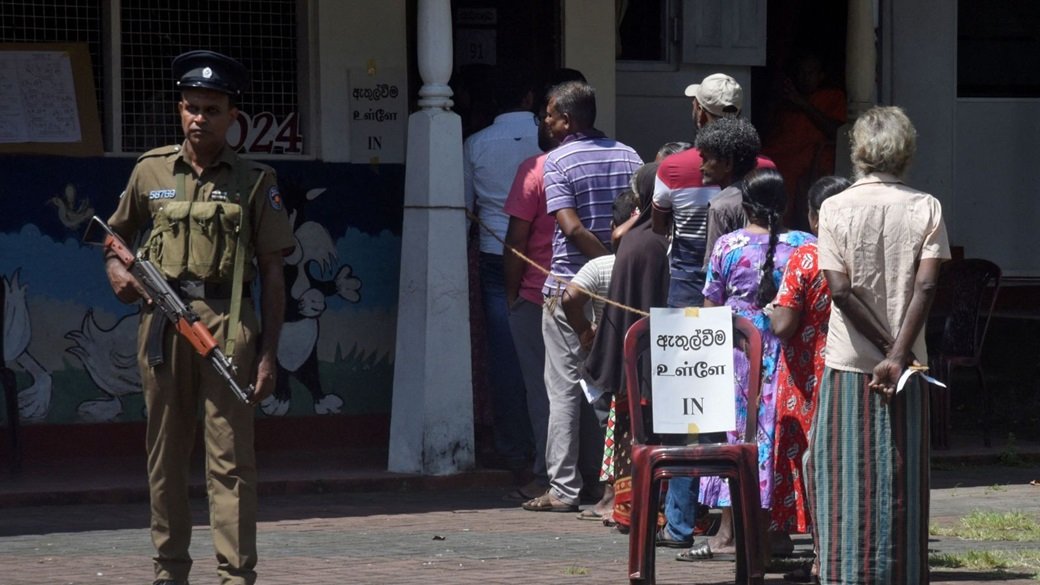
The Election Commission’s August announcement that the presidential election would be held on 21 September ended months of fevered speculation that the president might attempt legal manoeuvres to postpone the vote.115 The election will in large part be a referendum on how Wickremesinghe’s government has handled the economic crisis and ensuing modest recovery; it will also, in a more limited way, indicate the degree to which the aragalaya protest movement’s demand for “system change” still resonates with Sri Lankans. Concern among international partners that the campaign and its possible outcomes could complicate implementation of the IMF reform program is high, with one senior Fund official in Sri Lanka warning that any shift in government policy would have to be “realistic and achievable within the timeframe of the program” since the country was on a “knife-edged path” to recovery.116 Despite these worries, the polls also offer the chance for important adjustments and the prospect of winning greater popular support for a more inclusive, equitable reform program.117
Opinion polls indicate widespread dissatisfaction with the economy and suggest that, despite recent gains, Wickremesinghe remains the underdog, running behind his two main rivals, opposition leader Sajith Premadasa, who heads the Samagi Jana Balawegaya (SJB) and Anura Kumara Dissanayake, leader of the leftist Janatha Vimukthi Peramuna (JVP) and its National People’s Power (NPP) alliance.118 With the political landscape more fluid and unpredictable than ever, what looks to be the country’s first-ever three-way race could well be very close, particularly given the uncertainties surrounding preference votes.119
Presenting himself as a non-partisan candidate and promising to complete his work of economic recovery by continuing with IMF-backed reforms, Wickremesinghe is running as an independent backed by a range of parties and individual politicians.120 Having planned on the SLPP’s formal backing, his campaign suffered a setback when the party decided to put forward its own candidate, Namal Rajapaksa, son of former president Mahinda Rajapaksa. While the large majority of SLPP legislators, many of them government ministers, are backing Wickremesinghe, his campaign will lack support from the SLPP’s formidable party machine, probably lessening his already modest chances of victory.121
To date … the [SJB] has struggled to articulate a clear vision or a convincing platform and has suffered from internal divisions.
Opinion polls in the months immediately prior to the vote have shown the SJB’s Premadasa in or near the lead, in a close race with the NPP’s Dissanayake.122 As the largest parliamentary opposition party, with a number of veteran legislators who have extensive economic knowledge and government experience, the SJB may be well placed to devise more inclusive policies under the terms of the IMF deal. The party announced its intention to revise the agreement, but SJB members have also made clear that they would respect much of the existing deal.123 Premadasa has regularly declared his support for a “social democracy” that aims at “reducing inequalities”, and senior SJB legislators have stressed the importance of developing a more equitable tax system.124 To date, however, the party has struggled to articulate a clear vision or a convincing platform and has suffered from internal divisions. Having served as ministers under Wickremesinghe when he was prime minister from 2015 to 2019, Premadasa and other SJB leaders also have trouble distinguishing themselves as a credible alternative force.125
The NPP’s Dissanayake, who has led in polls for much of 2023 and 2024, promises a more radical break from current policies and ways of doing politics. Organising intensively across the country since the end of the protest movement, Dissanayake and the NPP aim to channel popular anger at economic hardship and lack of action on corruption. They are positioning themselves as the inheritors of the aragalaya’s project of “system change” and the only real alternative to the establishment parties that have ruled Sri Lanka since independence, given that the JVP, which dominates the alliance, has only been in government once – and then only briefly.126 Many appear willing to give the NPP a chance to solve the country’s problems.127
On economic issues, the NPP has made a major effort to moderate its image and adjust some of the JVP’s more leftist policies, even as the JVP remains the driving force behind the coalition.128 From its initial rejection of any role for the IMF, it now agrees that the Fund should play an essential role in economic recovery, but promises to renegotiate the bailout agreement so as to make it more equitable.129 Despite its longstanding opposition to privatisation of state-owned companies, the party now also accepts that some sell-offs are acceptable, so long as strategic industries remain under state control. It will, however, almost certainly be opposed to many of the long-term “structural reforms” – to land, agriculture and labour laws – that the IMF believes are essential to increasing productivity and growth. More broadly, the JVP’s socialist rhetoric, violent revolutionary past and limited government experience, alongside the absence of a detailed policy platform from the NPP, have raised concerns among many middle-class and wealthy voters, as well as Sri Lanka’s international economic partners.130
Given the deep mistrust between many in Sri Lanka’s elite and the JVP, and the longstanding bitterness between the JVP and Wickremesinghe, some observers worry that a close race in which the JVP/NPP’s Dissanayake appears to have a real chance of winning could bring with it risks of violence. Either his victory or his narrow defeat could raise tensions. The fact that the system of preference votes could see the election produce, for the first time ever, a president who has not won a majority of votes, adds further potential for volatility.131
VI.Ensuring Equitable and Sustainable Reforms
With the presidential election approaching, the future of Sri Lanka’s economic reforms hangs in the balance. Opposition to the tough measures imposed by President Wickremesinghe has risen as many citizens suffer enormous hardship at the same time as Colombo cuts costs and takes other austerity measures perceived by the public as unfair. Some influential foreign governments, meanwhile, are fearful that elections could bring to power a government less committed to the IMF’s liberalising measures, or that powerful constituencies in Sri Lanka might otherwise thwart the reforms.132
For the sweeping program of fiscal adjustment and liberalisation to work in Sri Lanka, the government, the IMF and foreign supporters should do more to ensure that the cost of reforms is shared more evenly than it has been to date, with the wealthy paying a fairer share and poor, struggling Sri Lankans offered greater relief from austerity measures. The authorities should also take bolder steps to combat corruption and impunity and loosen the hold of vested interests on policymaking, all of which undermine public faith in government at a time when major changes in the state’s role in the economy make trust in the impartiality and integrity of authorities more important than ever. Only by appealing to public ideas of fairness, integrity and equity can the IMF’s overall reform agenda prosper.
A.Toward Effective Prevention and Prosecution of Corruption
With a new government likely to be in place by the end of 2024, the IMF and Sri Lanka’s other development partners should strengthen their calls upon all political parties to create institutions and procedures that can help prevent corruption and increase the chances that senior politicians and officials are held accountable for abuses.
A credible plan for tackling corruption should start with several of the preventive measures identified by the IMF in its governance diagnosis. These include approving a Proceeds of Crime Act that has been strengthened by input from activists and experts on asset recovery; tracking and publishing the assets of senior government officials, with meaningful sanctions for non-compliance; and making key reforms in procurement and public finance management.133 Sri Lanka should also heed the advice of numerous government commissions and establish a public prosecutor’s office, independent of the Attorney General’s Department and empowered, among other things, to investigate and prosecute serious crimes involving government officials, including corruption.134 Finally, the government should formally re-engage with the Stolen Assets Recovery program, co-managed by the World Bank and the UN Office on Drugs and Crime, and commit to renew the pursuit of cases investigated from 2015 to 2019.135
Sri Lankan civil society organisations and anti-corruption activists are key allies in the campaign against graft. While Sri Lankan civil society is divided over the merits of many of the IMF’s liberalising economic reforms, there is widespread consensus on the urgency of addressing corruption. It is in part due to sustained lobbying and information sharing in Colombo and Washington by a coalition of Sri Lankan and international NGOs that the IMF’s governance diagnostic has emerged as a potentially ground-breaking roadmap for reform.136 The IMF, with the backing of major contributing members and development banks, should encourage the next government to invite civil society organisations – whose local knowledge and expertise has already proven invaluable to the Fund – to play a central role in monitoring fulfilment of the governance diagnostic’s recommendations.
B.Protecting the Most Vulnerable
Given budget constraints and low tax rates, the Sri Lankan government does not now have the money to fund the universal anti-poverty program that many researchers and activists are appealing for.137 Even so, it could commit to gradually increasing cash grants as state resources improve, while taking other steps to offer relief to the most vulnerable. It could, for example, provide adequate funding for school meals and the Triposha nutritional supplement programs, which are open to all children and pregnant and lactating women, respectively.138
Furthermore, in light of the troubled rollout of the Aswesuma cash transfer initiative, the government should ensure access to reliable information with regard to eligibility, selection and benefits, carrying out meaningful consultations with those most affected – namely women, vulnerable groups and other welfare beneficiaries – and organisations who work with them. On the basis of this feedback, the authorities should review and possibly adjust the Aswesuma algorithm.139
C.Structural Reforms to the State and Economy
A lack of transparency in government has fuelled public concerns that economic reforms are not being carried out fairly or cleanly. Ensuring broad political and public support for reforms is nevertheless critical, particularly when it comes to major changes in the structures of the state and economy that touch on the lives of many Sri Lankans. Any sale of state assets under the terms of the IMF program, for instance, should be pursued as transparently as possible, with strong safeguards against insider deals and with benefits and costs clearly communicated to the public. To avoid suspect sales and ensure the maximum public benefit from any restructuring, the government should first establish the corporate governance, competition and regulatory frameworks needed.140
At the same time, an obvious and potentially significant source of increased state funding for social protection, health and education would be reductions in the military budget. At 2.2 per cent of GDP, spending on the security sector has come down from its post-war high, but with more than 300,000 personnel on the payroll, the combined police and military budget of 564 billion rupees ($1.86 billion) f0r 2024 is almost as large as government expenditures on health and education combined.141 With the overwhelming majority of the budget earmarked for salaries, cuts have been politically unpalatable, given the economic impact they would have in the countryside, where most security personnel come from. Post-crash austerity has nevertheless nudged the government toward beginning the process of downsizing.
Opposition parties … should publicly endorse careful, systematic cost cutting.
With a high-level committee reviewing national security policy and initial staff reductions under way, opposition parties – especially the JVP and SJB, which are demanding more social spending – should publicly endorse careful, systematic cost cutting.142 First, they will need to have difficult conversations with military leaders who have grown powerful and developed a sense of entitlement after being lionised for the state’s victory in the civil war.143 The process should also engage residents of the north and east, where military garrisons – a civil war legacy – are widely felt as oppressive and damaging to the local economy.144
Lastly, the series of “growth-enhancing structural reforms” that would liberalise labour and land markets and transform agriculture and education, and which have been backed by the World Bank, Asian Development Bank and Sri Lanka’s bilateral creditors, should be treated with great care and receive far wider public debate before they are introduced.145 A draft labour law and a new National Education Policy Framework have already triggered protests, and there are growing concerns about the government’s push to increase private ownership of land.146 Before it enacts such socially transformative policies, the government should consult widely, winning enough support from affected constituencies to avoid major social upheaval and potentially violent disruption.
The next government should ideally leverage its electoral legitimacy to win agreement from the IMF and development banks to revise the package of liberalising reforms so that whatever growth they deliver is more equitably shared. To do so, the reforms will need to mitigate – through a strengthened social protection system – the lost job security and other burdens of transition, which would likely fall hardest on working-class and poor Sri Lankans. Prospective changes should also distribute more widely the benefits of any higher productivity through progressive taxation and improved access to public goods, such as education, health care and public transport.
D.Foreign Support and Debt Relief
The presidential election has not been postponed, as many had feared, but the poll’s high stakes and the lack of trust between the main parties mean diplomats and development partners should continue to press the government and security forces to allow for full and free campaigning. Domestic and international election monitors should be particularly alert to the possibility of local violence between supporters of rival candidates, as well as post-election unrest, especially if counting goes to a second round, as is expected, and preference votes prove decisive.147
Whichever candidate wins, foreign governments close to Sri Lanka should press for more equitable implementation of the reforms under way and a more inclusive, transparent process. The interest of Western governments, Japan, India and other bilateral creditors – with the exception of China – in doing so is not merely altruistic. Should the IMF program, which they advocated for and helped finance, fail to bring tangible benefits to the vast majority of Sri Lankans, their own reputations in the country will be affected. These creditors “are now inextricably linked to the IMF program in the country’s public imagination, and will be held at least partly responsible by many for the inevitable pain it brings”, a diplomat acknowledged.148 China, in turn, can strengthen its claims of friendship with Sri Lanka by providing a public update on and quickly concluding negotiations to restructure debt owed to the China Development Bank.
The IMF … may well have to adapt to a handover of power after the elections and seek partners among forces across the Sri Lankan political spectrum.
Having given Wickremesinghe almost uncritical support, the IMF, multilateral development banks and bilateral donors may well have to adapt to a handover of power after the elections and seek partners among forces across the Sri Lankan political spectrum.149 “The IMF and its influential members would have been wise to try and build a broader political consensus for reform, beyond the president and his key ministers”, a senior diplomat observed.150 The IMF argues that it is not mandated to address political issues directly, much less impose conditions on a country’s political orientation. But achieving the reforms it has laid out, particularly those at the heart of its own “governance diagnostic”, will only be possible if the broadest possible domestic coalition emerges in favour of major change.151
In the event that Dissanayake wins and an NPP government seeks major changes to the current program, the IMF should show flexibility while insisting that further substantial increases in government revenue are essential to resolving Sri Lanka’s debt crisis. The Fund should assist the new government to develop sustainable ways of expanding the revenue base, including through taxing wealth. In exchange for significant progress on revenue growth, the IMF should be open to a small reduction in the 2.3 per cent primary budget surplus target, in order to free up more resources for essential social spending.
Finally, Sri Lanka’s international creditors need to accept that additional debt relief will be necessary to create the fiscal and political space for a new government to share more widely the costs of austerity and distribute more equitably any benefits from structural reforms. The IMF, which itself acknowledges that current support may be insufficient and that further debt restructuring is most likely required, should initiate discussions as soon as possible in order to develop viable options. A good first step would be for the next government to convene a panel of independent economists to conduct an updated debt sustainability analysis based on a framework better attuned to Sri Lanka’s specific debt and currency challenges than the IMF’s market access model. On this basis, the government could begin discussions with the IMF and international creditors about how much additional debt relief is needed and how best to find it.152 Colombo should ideally allocate any additional relief it may obtain to allow for more equitable treatment of the EPF and ETF pension funds, which suffered so badly under domestic debt restructuring.
VII.Conclusion
Two years on from economic and political meltdown, Sri Lanka’s crisis is far from resolved. Despite improved macro-economic indicators and the disappearance of most signs of turmoil, hardship remains acute and widespread. Amid an uncertain economic outlook, political volatility is high; it could rise still further as the country approaches a presidential election and embarks on a series of other polls, including parliamentary elections some time before August 2025.
Many of Sri Lanka’s international development partners placed a bet on Wickremesinghe’s ability to bring stability through top-down fiat. But pushing through a painful set of economic policies without the democratic backing gained through elections, while also paying little heed to demands for greater equity in budget cuts, tax rises and tariff hikes, or for more boldness in fighting corruption or reforming governance, has stirred a public backlash. Opinion polls and initial campaigning suggest the 21 September presidential election will be close. For the first time ever, it could produce a winner who fails to gain a majority of votes. Either a victory or a narrow defeat of the leftist NPP’s candidate could stoke tensions. Should either the NPP’s Dissanayake or the SJB’s Premadasa win, the government will likely face high expectations of a respite from austerity that will be hard to meet within the current terms of the IMF bailout.
Regardless of who eventually wins, political parties and civil society organisations should seize the opportunities presented by the IMF program to reinforce the anti-corruption fight while recrafting the state’s relationship to the economy in ways that can produce inclusive growth. With its own reputation at stake, the Fund, in coordination with its contributing member states and other multilateral institutions, needs to assist whichever government comes to power to implement the deal in the most equitable, fair and transparent way possible. The IMF will need to be willing to revisit elements of its reform program, including through a new debt sustainability analysis that could help deliver the additional relief needed for Sri Lanka’s recovery to be economically and politically sustainable. The Sri Lankan economy may for now have been put back on its feet, but many citizens have yet to be convinced that the price has been worth paying.
Colombo/Brussels, 17 September 2024
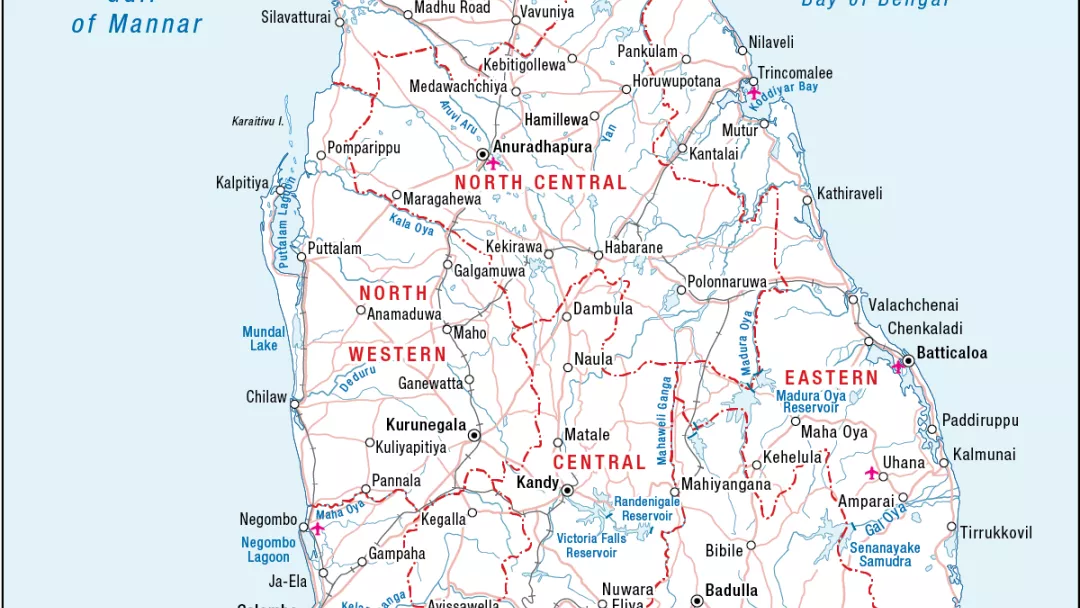
Appendix A: Map of Sri Lanka
source: https://www.crisisgroup.org/