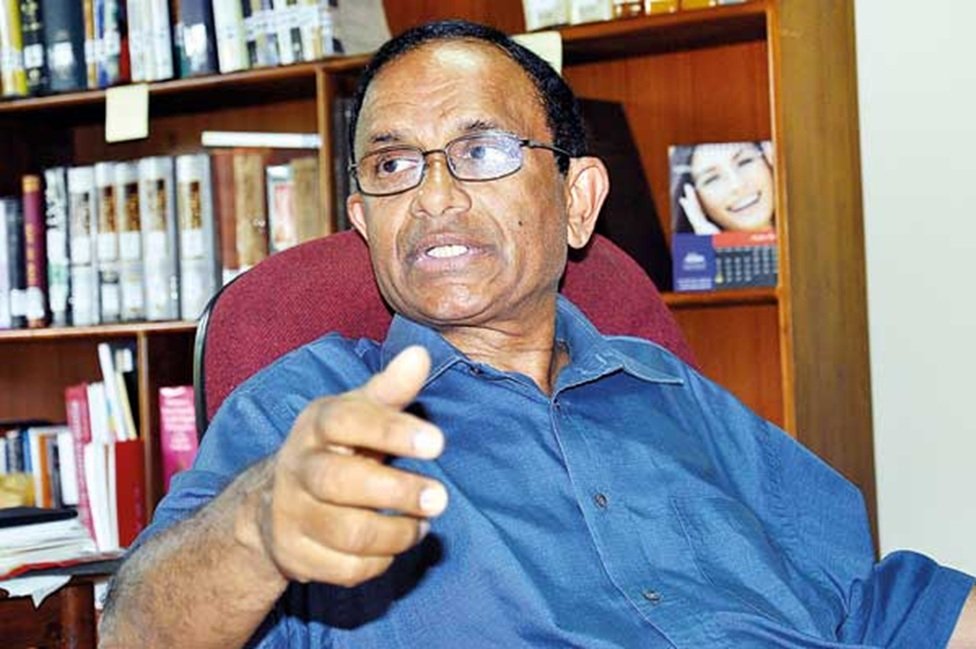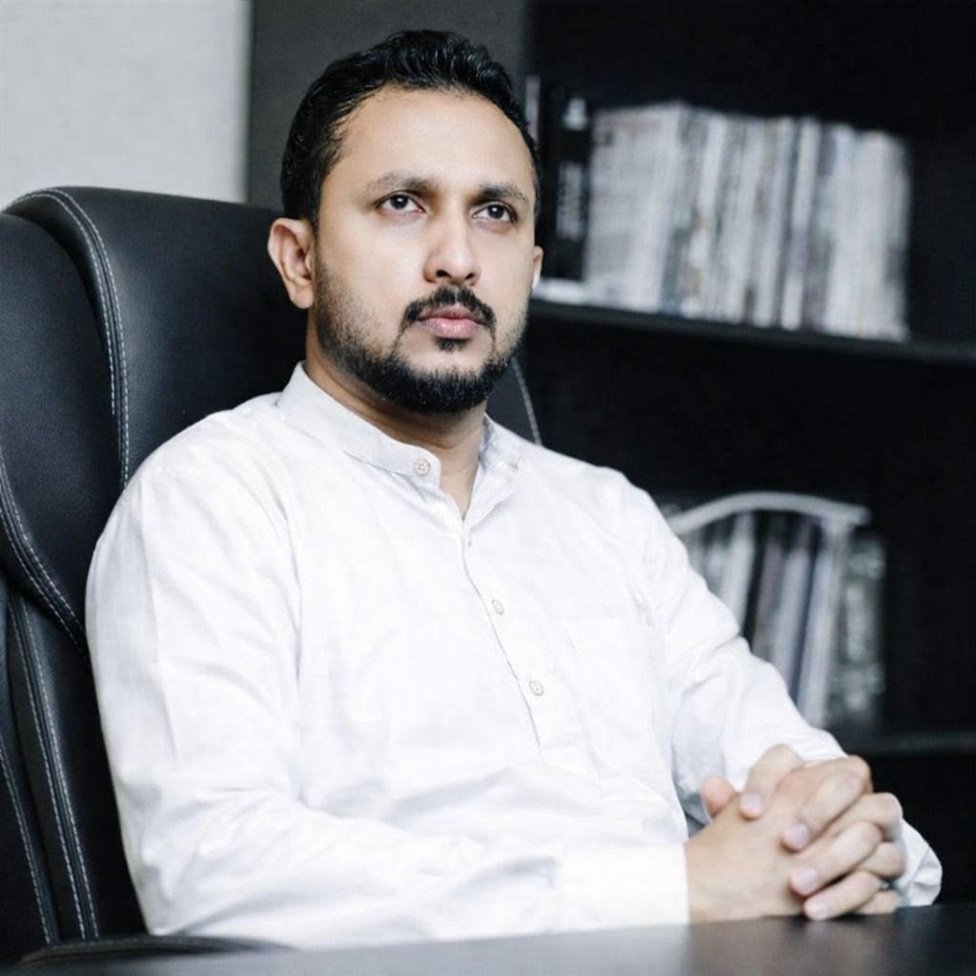
We firmly stand for the nationalism of this country – Dr. Priyankara Mahagammullage, Media Spokesperson, Sarvajana Balaya
- Editor
- March 23, 2026
- English Header, Political
- Political
- 0 Comments
What is happening in Sri Lanka at this moment? How does the Sarvajana Balaya Party view the current political situation?
First of all, the rise of the National People’s Power (NPP) to power represents, in this view, a political distortion rather than a mandate based on policy. The government did not come to power because the public studied or believed in its manifesto, “A Thriving Nation – A Beautiful Life.” Instead, it emerged from the momentum of the 2022 ‘Aragalaya’. After the country’s collapse, Ranil Wickremesinghe assumed the presidency following Gotabaya Rajapaksa’s resignation. He worked to stabilize the state: the legislature and judiciary were preserved, but the executive had effectively collapsed. In that context, the Janatha Vimukthi Peramuna (JVP), which leads the current government, is accused of attempting to further destabilize the system, even aiming to create anarchic conditions similar to past unrest in Bangladesh. However, Wickremesinghe is credited here with protecting the state. In order to protect the state, it was necessary to stabilize the collapsed economy. The government had to rebuild the collapsed economy, improve living conditions, and support impoverished citizens. This involved unpopular but necessary steps such as raising taxes, introducing fuel rationing, and increasing income taxes. As a result, people lost their previous standard of living and economic stability, leading to widespread hardship and emotional frustration.
Amid this environment, the public – driven by anger and urgency – sought alternatives. However, it is argued that such emotional conditions prevented rational decision-making. The JVP capitalized on this sentiment, campaigning on promises to “catch thieves” and recover stolen wealth, a strategy characterized here as rooted in anger-driven politics.
They made another attractive promise. They promised to create a government of the common people by improving the lives of the people by removing taxes on essential goods, removing taxes on school equipment, and reducing electricity bills by 30%. But so far, the government has failed to fulfill both of these promises.
According to you, what is the identity of this government?
Previously, a number of governments came to power with the support of leftist parties. In each case, leftist party alliances were formed with the Sri Lanka Freedom Party (SLFP). The Bandaranaike government of 1956, the July government of 1960, the United Front (Samagi Peramuna) government of 1970, and the Chandrika Bandaranaike government of 1994 also received direct support from leftist parties. The Mahinda Rajapaksa government of 2005 and the “Good Governance” (Yahapalana) government of 2015 received direct support from the JVP. However, a single center-left government came to power in Sri Lanka in 2024. That is the current National People’s Power (NPP) government. However, this government did not come to power by making leftist policies win. It happened based on the popular impulse that arose from the country’s bankruptcy. No matter how it comes to power, a center-left government should stand for the common people and for social justice. Policies should be formulated and worked on in a way that minimizes income inequality. But this government has not even thought about these things. This government does not have the capacity or the thinking to do them.
Are you saying that the public has not benefited from this government?
Yes, what did the common people get? The government promoted itself as a “Renaissance government” representing ordinary people. However, it is argued that the public has not received tangible benefits. The manifesto, containing 1,329 promises, is said to have been largely ignored, with less than 10% implemented. Today, the President and the government have no memory of these promises.
Are you saying that the current government has no policy?
Yes, that is Ranil Wickremesinghe’s ‘Puluwan Sri Lanka’ programme. I am happy that this program is being implemented. But the people who voted for NPP did not expect this kind of situation. NPP said during the election that if they voted for Ranil Wickremesinghe, the country would be finished. But today they are implementing Ranil’s program. Not a single letter of it has been changed. In a way, it is good to do it that way. It is a good situation to implement Ranil Wickremesinghe’s program until the country is stable.
The government always emphasizes that it is taking strong action against racism. What do you think about this?
This is an anti-nationalist government. They are doing politics to please the Tamil diaspora. The reason for that is that they are very afraid of the upcoming elections. The government is hoping to come to power in the upcoming elections by getting a minority vote percentage from the majority Sinhala people and a majority vote from the minority people. That means the government is planning to come to power in the future by getting a minority vote from the majority and a majority vote from the minority. That is why the President is attacking Sinhala Buddhist cultural values, ignoring them, and disregarding Sinhala Buddhist traditions. This is not good for the country. I repeat that bringing this government to power is a historical mistake made by the people.
Even though you and the opposition make these accusations, the opposition does not have a plan to take power, right?
Many of us are not happy with the way Opposition Leader Sajith Premadasa is working. He does not confront the government strongly. Perhaps it is his political strategy. The other thing is that this is a government that was put into power by the people with more than 2/3 of the vote. In such a situation, the opposition remains silent for a while, respects the public opinion, and temporarily backs down. Also, after a party that has been in power is defeated in an election, it takes a considerable amount of time to recover. This government has only been in power for a short time. The people are saying, ‘This government should be given a little more time.’ I think they will spend another six or seven months in that position.
Do you think the people will protect the government even during the current crisis?
Yes, if the fuel crisis cannot be managed, public opposition can explode very quickly. This is also like a newlywed marriage. It takes time to see the shortcomings and weaknesses. Even then, you have to be patient for a while. The outside world tells you to be patient for a while longer. They tell you to let the mistakes be corrected. The government also has that time. It’s needed to wait until that time is over. Public opinion regarding the current government is similar to this. Public opinion against the government has not yet matured; it is not in a strong position. But in a little while, the real situation will be revealed. Until that day comes, the opposition can correct its shortcomings and strengthen its organizational structure. Talks about forming an alliance and forming a coalition government are discussed only in a situation where an election is approaching.
How is the Sarvajana Balaya positioned in this political situation?
We firmly stand for the nationalism of this country. That means we stand for the majority ideology. That does not mean that we treat other religions and ethnic groups unequally. We accept the Constitution. No matter what anyone says, the 1978 Constitution is very progressive. It is not bad. And we are strongly opposed to attacking the nationalist ideology of this country. But this government is doing it. We stand for our civilization, for our heritage. Indian Prime Minister Modi and US President Trump are doing that. We are building a country where all ethnic groups can live in harmony, and we are giving our history the place it deserves. The people who civilized this country should be given that value and recognition. We are firm in our stance that Buddhism should be protected and nurtured. And we accept the open market economic system. But we believe that some areas require at least some state intervention. We accept state intervention, especially in services like health and education. Education and health need some state intervention. But the Sarvajana Balaya accepts that the government should distance itself from doing business as much as possible, allow entrepreneurs, and allow for a free system.
Interview by: Waruni Jayathunga