The impact of the growing crime wave on social security
- Editor
- March 3, 2026
- English Header, Opinions
- opinion
- 0 Comments
The 263rd session of the ‘Kathikawa’ organized by the National Movement for a Just Society every weekend, was held last Sunday under the theme ‘The Impact of the Growing Crime Wave on Social Security’. The resource persons for the discussion were Prof. Neranji Wijewardhana, Professor in Criminology, Department of Criminology and Criminal Justice, Faculty of Humanities and Social Sciences, University of Sri Jayewardenepura, and President’s Counsel – Maithri Gunaratne, and journalist Shan Wijethunga moderated the discussion. This article has been compiled based on this discussion.
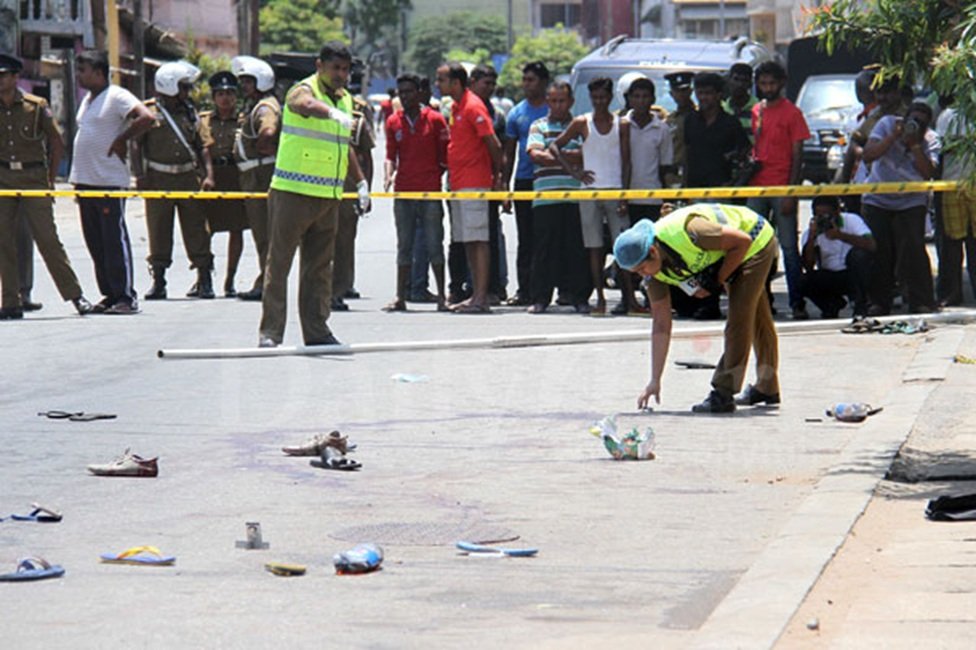
The shooting of a lawyer and his wife in the Akuregoda high security zone, where the Defence Headquarters Complex is also located, on Feb. 15, and fled the scene, caused a shock in society. Meanwhile, the revelations made by the police in a very short period of time regarding the murder intensified that social shock. With this murder, the Bar Association of Sri Lanka (BASL) convened its general assembly on Feb. 17, after 13 years. Accordingly, members of the BASL took steps to refrain from appearing before the courts on Feb. 18.
Although this double murder, mentioned by the media as the ‘Akuregoda double murder’, was not the ‘only’ murder in recent history, due to the impact shown by the legal community regarding their professional security, this double murder did not become ‘another murder’ or an ‘isolated incident’ as the government repeatedly claims on such occasions, but caused a certain shock in society and politics. It revived a broad social conversation on the ‘impact of the growing crime wave on social security’, and freshened up the slogans such as justice for the more than 100 reported murders that occurred in the past year, the prevention of such murders, and putting an end to the culture of murder.

Collective support from several parties is needed to control the crime wave – President’s Counsel Maithri Gunaratne
President’s Counsel Maithri Gunaratne, a prominent attorney working for criminal justice, made a serious criticism of the growing crime wave based on his professional experience and socio-political sensitivity. He criticized the current government and the police, and also questioned how the crime and drug menace can be eliminated in a situation like the way the police were acting without professionalism for the sake of mere popularity. Mr. Gunaratne pointed out that the police should clearly intervene in this problem.
“The police should intervene directly and actively in this matter. If there are red notices issued, the police have the ability to execute them. Even if the police have the ability to bring back the suspects who are subject to red notices with the support of the government and the embassies or high commissions of the relevant countries, the police are not doing so. Even the IGP does not seem to be fulfilling the necessary responsibility,” he pointed out.
- National Security
Mr. Gunaratne strongly rejected the government’s claims that the wave of murders or crimes does not pose a threat to national security. He pointed out that the murders and crimes occurring in the country are detrimental to the overall image of the country, including tourism and foreign investment.
Explaining his position on this matter, President’s Counsel Gunaratne emphasized that it is challenging to attract tourists and foreign investment to a country that has not guaranteed national security.
“The government says that these murders do not pose any threat to national security. This is a complete lie. Such killings and crimes are a direct threat to national security. They also harm tourism, foreign direct investment, etc. Every opportunity to disrupt the peace of the country is a direct threat to national security. Not only the people of the country, but also foreign media, embassies, and international organizations are watching these. If the security of the country is not guaranteed, if killings and crimes are happening everywhere, how can the country’s tourism industry be developed? These murders and crimes directly affect the tourism industry, which is growing naturally and developing without state intervention. This wave of crime is not good at all for the efforts being made to attract wealthier tourists. I clearly state that this wave of crime is detrimental to the development of the country as well as the overall well-being of the country,” Maithri Gunaratne further stated.
- Who is responsible?
The President’s Counsel pointed out that the Sri Lanka Police have a greater responsibility in suppressing the crime wave, and noted that the Attorney General’s Department also has a greater responsibility in this regard.
Mentioning several recent murders, including the murder of Ganemulla Sanjeewa, as examples, he emphasized that the Attorney General’s Department has not taken ‘sufficient’ steps to conclude cases related to several controversial murders that have occurred in the past.
“If these matters continue to be delayed, the Attorney General should discuss these matters with the Chief Justice and take appropriate steps. If steps are taken to resolve these cases expeditiously, especially through the establishment of three-member High Court benches, it will create fear among criminals and confidence among citizens,” Mr. Gunaratne further stated.
- The role of the media
The way the media in Sri Lanka handles crime reporting has long been heavily criticized. According to Maithri Gunaratne, the role of the media in combating crime is unique and problematic. He particularly strongly condemned the way the media handles the arrest and killing of criminals.
“Some media outlets are turning these criminals into film stars. Bringing criminals to court is broadcast like war films. What is happening now is reporting that is turning these criminals into superstars. These are being broadcast on channels in the evening. What do the boys in the villages do who watch these? These criminals become their heroes. Not only the youth who are not criminals, but even the petty criminals are stimulated through this reporting. Criminal behavior is stimulated in them. They feel a desire to put their faces on TV like these criminals and to have their names read out frequently. Therefore, I tell the media to stop this reporting. Criminals should not be given this kind of publicity or social attention, especially the attention and attraction of the youth. The petty criminals in the villages should not be appointed as ‘underworld leaders’, Maithri Gunaratne called for an end to the role of the media that promotes crime and stimulates the criminal mentality. He also made a request to the media institutions.
“Reporting these criminals as the main news should stop. I think if media institutions take such a step, it will somehow help control this crime wave,” said Mr. Gunaratne.

“If the fence and the boundary ridge eat the paddy crop, to whom can I tell this grievance/distress?”– Prof. Neranji Wijewardhana
If Sri Lanka is currently facing a crime wave or if it is eroding the entire social and economic fabric, the responsibility of correcting that error also falls on the institution established for crime control and suppression. Moreover, the fear of crime is stronger than all fears, and the damage caused by crime is also stronger than all other damages. Similarly, the cost of crime is stronger than all other costs.
“I have a reason to say this, that is, the complications caused by crime in society sometimes remain for a lifetime. Also, if a person becomes a victim of a crime, it is a situation for which we are all responsible. This is not just a life-related issue. If society is so confused that there is doubt about returning home after leaving the house, that confusion has a strong impact on our labor productivity, on the one hand. Also, no country in the world has completely eliminated crime. Crimes occur even in developed countries like the United States. Serious crimes occur. But their use in combating crime is different from ours and deserves appreciation,” said Prof. Neranji Wijewardhana, entering the discussion.
- The role of the police
Pointing out that the police are not there to protect politicians but to maintain peace in the state, Prof. Wijewardene noted that the public also expects a broader role and service from the police.
“But if an institution entrusted with such a broad role does not fulfill it properly, it means that an environment unsuitable for living has been created in society. This situation is not at all conducive to social harmony, mentality, and the development of the country; it is a seriously harmful situation, extremely negative,” said Prof. Neranji.
She pointed out that economic development alone cannot be considered the development of a country.
“We spend the money that should have been spent to build a school on combating crime. The tax even collected from the small amount of sprats and a packet of milk powder that people buy is also spent on combating crime. That means that the people have already paid the price that they should have paid for combating crime. But no matter how much they pay, if they do not receive any benefit from that price, it cannot be considered a good situation. If a person who takes to the streets does not have the opportunity to live without fear of crime, then there is a doubt as to ‘are we really safe?'” said Prof. Wijewardena, pointing out that today’s society is experiencing organized crime and drug trafficking more than ever before.
- Enough said.
Prof. Neranji pointed out that the people have given politicians enough platforms to fight crime. She recalled that people had been talking about this issue for a long time and emphasized that today’s society is afraid of crime because there is no ‘proper’ mechanism to fight it.
She pointed out that, in some cases, various mechanisms were created for this purpose, and said that ‘over time, those mechanisms were also politicized’.
Prof. Neranji alleged that when a crime occurs that attracts socio-political attention or is of some importance, a social conversation is immediately created, but when another topic comes to the fore in a very short time, the aforementioned social attention is immediately lost.
“Some time ago, when there were problems related to the drug ‘Ice’, we immediately conducted awareness campaigns and inspections throughout the entire school system. The entire society was interested in this. But it was only implemented for a limited time. At present, there is no attention in society about this, neither the government nor the Ministry of Education, which implemented these programs, nor the police.” Prof. Nerenji alleged that creating ‘conversations without practicality’ in such cases further confuses the situation and complicates it.
“We are launching short-term, immediate, and attractive propaganda programs, but are not focusing on a program that is based on long-term policy decisions. Also, although we understand the extent of this problem, we do not have the interest to act and commit to it. It is impossible to understand whether this reluctance is to protect the political mechanism or to remain silent for the welfare of another party,” argued Prof. Wijewardena.
- A long-term battle
She pointed out that since the introduction of the open economic policy in 1978, various crimes that were previously unheard of have increased in the country.
“For example, in our extended family, child abuse is a stranger word. However, with social modernization, urbanization, the popularity of the nuclear family, globalization, the information society, and the openness of society, various abuses and deformities, including child abuse, have become normalized,” Prof. Nerenji noted, further pointing out that a well-functioning criminal justice mechanism was established in this country’s society.
“The broad concepts used in criminology today were first socialized by our villagers. They said, “The ash ground thief is known by the ash on his shoulder” (Puhul Hora Karen Dane). Today, this concept is an advanced concept in criminology that is being talked about at the highest level internationally. But over time, with the politicization of our entire social and economic fabric, this advanced independent mechanism has weakened. Sometimes we can even recognize a situation where it is dysfunctional,” said Prof. Neranji.
- The cost of crime
“My argument is that in many cases, the cost of crime cannot be calculated. We have to reconsider whether the intended purposes of things like imprisonment and rehabilitation for the punishment of crimes have been achieved. The reason for this is the increasing tendency to commit crimes again, and people who are imprisoned for rehabilitation purposes are re-joining criminal gangs and resorting to committing more heinous crimes than before, and resorting to technological crimes. Today, in civil society, if heinous crimes are committed in broad daylight, and people who work for the suppression of crime become victims and accused, what do we do? In such a situation, we have to hear our popular village saying, “If the fence and the boundary ridge eat the paddy crop, to whom can I tell this grievance/distress?” the professor further said.
Prof. Wijewardene argued that crime suppression will not be achieved through imprisonment, statistics, data, or police statements, or that solutions will not be found to combat crime.
- Data and crime prevention
“If we can somehow see the success of crime prevention from the data, we should ask them, whose fault is it that crime has increased to this point? My argument is that crime is always a word that generates fear; crime is never a word we like to hear. In this word that we don’t like to hear, human society cannot survive when the social norms that we respect and want to protect are broken. The reason for this is that their overall values and happiness are destroyed through these crimes.”
Prof. Neranji says that there is a sense of insecurity within families and among parents, even more so than during the last war. She clarified that there is an unprecedented fear in society as a whole about their child, brother, or husband becoming addicted to drugs, becoming a member of drug trafficking gangs, or becoming a victim.
“Not only that, but also there is a frightening environment in today’s society where being near a murder incident or witnessing it can make the person in question a victim. In such a situation, if we boast about economic development, we will have to reconsider that development.”
Prof. Neranji Wijewardene’s view was that a long-term and sustainable solution is needed to combat crime. Emphasizing the need for follow-up, she said that the question of why no government is willing to follow up on this issue is a question that is being asked by the academic community, including herself as a researcher and as an academic working in the field.
Note – Thushal Withanage